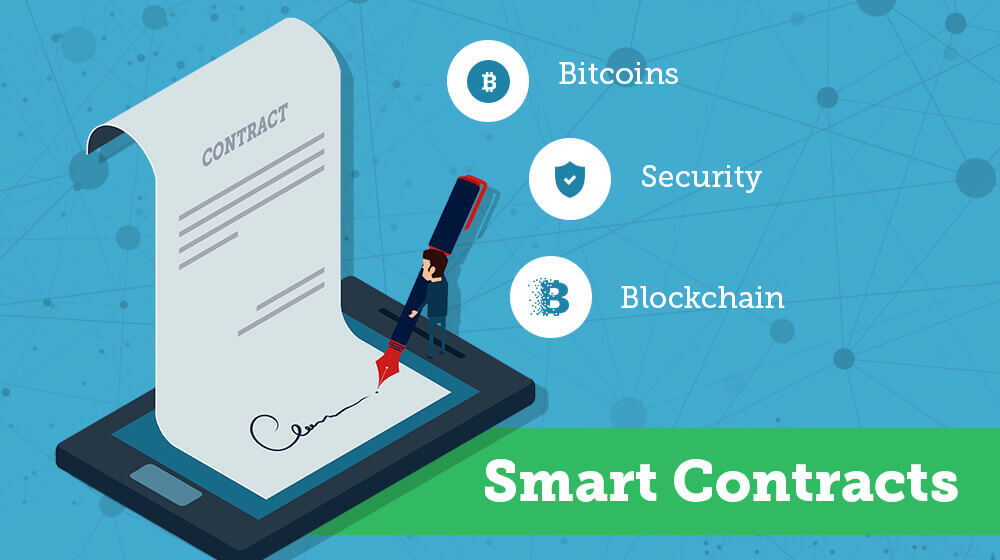
Smart Contract Development

Smart contracts are computer programs that automatically execute the terms of a contract when certain predetermined conditions are met. They are self-executing, tamper-proof, and transparent. They were first introduced by Nick Szabo in 1994, but it was not until the advent of blockchain technology that they became widely used.

Smart contracts are a key feature of blockchain technology. They allow for the automation of transactions and eliminate the need for intermediaries. This makes them an ideal tool for a variety of industries, including finance, real estate, and supply chain management.

Smart contract development is the process of creating these self-executing programs. It requires a deep understanding of blockchain technology, programming languages, and contract law.

Smart Contract Development Company

There are a growing number of companies that specialize in smart contract development. These companies employ teams of developers who have a wealth of experience in creating smart contracts for a variety of industries.

One such company is LeewayHertz. They have developed smart contracts for a variety of clients, including a major airline and a healthcare provider. They have also created their own smart contract platform, which allows for the creation of custom smart contracts.

LeewayHertz has a team of developers who are experts in a variety of programming languages, including Solidity, JavaScript, and Python. They also have a deep understanding of blockchain technology and contract law.

Smart Contract Development Process

The smart contract development process typically consists of the following steps:

  1. Identify the problem: The first step in developing a smart contract is to identify the problem that needs to be solved. This could be anything from a simple payment system to a complex supply chain management system.
  2. Define the contract: Once the problem has been identified, the next step is to define the terms of the contract. This includes the conditions that must be met for the contract to be executed.
  3. Choose the platform: The next step is to choose the platform on which the smart contract will be built. This could be a public blockchain like Ethereum or a private blockchain like Hyperledger.
  4. Write the code: The next step is to write the code for the smart contract. This requires a deep understanding of the programming language being used, as well as the contract law that governs the contract.
  5. Test the contract: Once the code has been written, it is important to test the contract to ensure that it works as intended. This includes testing for security vulnerabilities and ensuring that the contract executes as expected.
  6. Deploy the contract: The final step is to deploy the contract to the blockchain. This involves paying a fee to the network and waiting for the contract to be added to the blockchain.

Conclusion

Smart contract development is a complex process that requires a deep understanding of blockchain technology, programming languages, and contract law. Companies like LeewayHertz specialize in this field and have developed smart contracts for a variety of industries.

As blockchain technology continues to evolve, it is likely that smart contracts will become an even more important tool for businesses and organizations. By automating transactions and eliminating intermediaries, smart contracts can help to reduce costs and increase efficiency.

AIOT Combining AI and IOT

What is AIoT, and why is it important?

AIoT is the process of integrating AI technology into various IoT components. The combination of AI and IoT is among the most important factors to speed up the development of technology and services in the digital realm. The goal of AI is to improve operational efficiency, enhance interactions between humans and machines, and enhance the management of data and analytics.

Here’s a quick overview of the functions performed by both technologies, and how they form a symbiosis with one another.

  • Internet of Things (IoT)

It is a term used to describe a system which extends internet to different sensors, objects, and gadgets (things) to gather and exchange data from their surroundings using different devices or software programs. IoT seeks to link devices and objects.

  • Artificial Intelligence (AI)

Artificial Intelligence thrives on data. It’s all about learning and automatization using a variety of computational and statistical techniques. It is a term used to describe a system capable of processing data and learning or performing tasks normally related to intelligence that are similar to human. AI technology includes machines learning (ML) as well as natural processing of language (NLP) as well as facial and voice recognition. For more specific information, AI brings intelligence to objects and machines.

In combination, AI and IoT technologies make sophisticated, intelligent systems in which AI acts as a brain for IoT’s body. The IoT devices collect and send information from different sources to aid in the learning process that’s involved in AI to automate processes.

AI is a powerful tool that brings machine learning and decision-making capabilities for IoT systems, which improves the management of data and analyzing with enormous productivity improvements.

In conjunction together with AI, IoT devices get additional capabilities, such as learning from interactions with users as well as service providers and other devices that are part of the network. They can be adapted to changes in inputs and new conditions in the environment , and can perform the tasks with no intervention from a human.

How do Artificial Intelligence of Things-enabled devices work?

Since IoT networks are growing in every field there is a large amount of unstructured data from machines also is available. The growing volume of machine-generated and human-oriented data creates the need for AI support for non-structured analytics of data. The information generated by IoT-powered systems is crucial to satisfy corporate requirements and resolve the problems of functional managing the lifecycle of products.

AI and IoT are similar interconnected elements. When these two technologies work together, they are mutually beneficial and provide value to one another. AI can add value to IoT because of machines learning and decision-making, while IoT can benefit AI because of signals, data exchange and connectivity.

AIoT highlights the need for interoperability between devices (chipsets) and programs (programs as well as operating systems) and platform. Like earlier, AI implementations were monolithic with vertically-designed solutions, they require APIs to make devices, platforms and software extremely interoperable.

What are the advantages of AIoT?

  • Boosting Operational Efficiency

AIoT deployment aids in streamlining business operations by providing accurate forecasts and enhanced efficiency. Machine learning algorithms paired with AI can predict operational conditions and determine the parameters that need to be modified to provide better results. In addition to providing continuous data streams and identifying patterns that aren’t deceiving on basic indicators, AIoT also delivers meaningful information to prevent process redundancy and over-consuming time. For instance, Google leverages the power of AIoT to reduce the cooling costs.

  • Advanced Risk Management

A combination of AI and IoT aids in predicting potential risks and automating the response. It helps to manage the financial loss, safety of employees as well as cyber dangers. For instance, Fujitsu helps ensure the security of employees through an analysis of sources of information through AI and wearables that are connected.

  • Elimination of expensive unplanned downtime

Different organizations such as the oil and gas industry generally suffer from unexpected breakdowns. Equipment breakdowns cause an extended period of downtime which results in massive loss. The AI-enabled IoT platform and devices allows you to monitor machines in a consistent manner and recognize patterns that can predict malfunctions of the machine in time. The ability to anticipate equipment failure helps plan regular maintenance tasks. AIoT devices aid in anticipating breakdowns and malfunctions in machinery through data analytics and avoiding adverse effects from downtime.

  • Enhanced Products and Services

Natural Language Processing aims to enhance communication via gestures, speech or text between devices and humans. AIoT will allow for the creation of new products or increase existing services’ rapid process of data to help businesses. AIoT-powered devices, such as drones and robots provide an entire experience of monitoring and inspection to take human-like, intelligent decisions and make the right choices. Commercial vehicles also benefit from AIoT. It assists in the management of fleets by monitoring all the relevant information. Rolls Royce is a great example of incorporating AI to assist with IoT-enabled aircraft engine maintenance to detect patterns of perception and discover operational information.

  • High capacity

IoT devices range from top-of-the-line computer systems to microsensors and chipsets. A typical IoT system is comprised of batteries-powered sensors to manage the massive amount of data. AI plays an essential role in the identification, analysis and review of the huge amount of data flowing stored in cloud storage. When the amount of data is managed and manageable, it improves the capacity of the whole IoT ecosystem.

How Proof of Reserve Establishes Transparency for DeFi Platforms

The collapse of FTX (one of the biggest exchanges in the world) has shaken crypto and DeFi markets. Many have rethought their decisions to invest in cryptos after it became the topic of conversation. The crash of FTX caused by lack of liquidity and mismanagement of funds as well as questionable practices from its administrators, has resulted in the destruction of other exchanges and the devaluation of major coins like Bitcoin, Ethereum, and others. This incident once again shows the importance of checking liabilities for custodial and exchange institutions.

Decentralized crypto ecosystems have many points of failure. It is important to have checks in place. Even before the FTX collapse, there were numerous bankruptcies at traditional financial institutions. A standard practice must be established to verify liabilities. This can be tricky and requires that a third-party auditor be hired to complete an assessment. To assess the checks on DeFi platforms and exchanges, a Proof of Reserve audit could be considered the best practice.

What is Proof Of Reserve?

Proof of Reserve can be used to show that an exchange platform actually has the amount of cryptocurrency claimed to have. This auditing technique addresses the transparency concerns regarding assets stored on exchanges. It is a crucial inspection technique to make sure that real assets return crypto in a decentralized environment.

Proof of Reserve is an audit that allows trusted third parties to review the statements of Blockchain projects. They then give you a complete picture of the company’s reserves. Proof of reserve audits are a way to improve trust and transparency in crypto markets. This audit allows customers of exchanges or custodial platforms hold their custodian accountable. It lets users know if they are subject to liabilities and how much cryptocurrency is available on the platform.

Why is Proof of Reserve important?

Custodial services that rule the crypto space store their users’ assets within a hot wallet. This hot wallet is used to process withdrawal requests. Cold wallet storage is used to store a portion the user’s deposit. Customers receive a wallet address which allows them to make deposit requests. The cold and hot wallets can be switched between by the customers.

Custodial financial services do not give full custody to users as they retain private keys to these addresses. It is possible to trace transaction details that have been made using their cold and hot accounts to obtain information about assets held by the custodial institution. However, it cannot pinpoint the individual users’ share of the total assets. Instead, it shows only a combined view on the total assets of the custodial system. Inadequacy in knowing who owns what could lead to distrust among users.

In this scenario, proof of Reserve audit could be leveraged to perform an in-depth review of the total assets of the institution and discover what percentage of these assets are owned by individual users.

Proof of Reserve offers the best of both: transparency in asset management and customer assets privacy. The following are signs that a custodian/exchange is not adhering to a 100% Proof of Reserve pledge:

  • Misappropriation of users’ assets is possible.
  • Cashing out assets inefficiently or with delay
  • Inability to cash out assets when there are many withdrawal requests.
  • Suffer from asset losses or bankruptcy.

DeFi platforms will need to perform Proof of Reserve audits on a regular basis in order monitor their checks, balances, and other information.

Let’s see how Proof of Reserve audits work.

How does a Proof of Reserve audit work?

Proof of Reserve auditing involves the exchange or custodian partnering with a third-party crypto auditor in order to verify that its balance sheets have enough assets to balance customers holdings. It makes sure that customer holdings are correctly utilized and that real assets are returned to the cryptos. These third-party reports are cryptographically reconciled, which provides security and privacy to DeFi’s ecosystem.

HOW TO CREATE A STELLAR WALLET?

Blockchain has been an integral part of the global economy since its introduction in 2009. Bitcoin is now valued at more than $31,000. There are many other cryptocurrencies that have gained large profits, in addition to bitcoin. Stellar, a distributed payment network, was launched in 2014. It is unique because it allows cross-border payments to be made. It is an open-source blockchain database designed to make transactions more efficient, safer, and simpler. It provides secure, low-cost and real-time international payments.

Stellar Lumen is also known as XLM or Stellar Lumen.

Jed McCaleb was the founder of Stellar. Stellar allows people to transfer money internationally in crypto or their fiat currencies into crypto. Stellar Development Foundation, an international non-profit, is dedicated to unlocking the world’s potential economic growth by making money more fluid, markets opener, and people more empowered.

Stellar is unique in that the transaction fee for each transaction is only 0.00001XLM. Stellar’s transaction fees are low, which attracts more people and helps them keep the most of their money.

What is a Stellar wallet, and what can it store?

Stellar’s basic functionality is handled by a stellar wallet, which is an application component that handles account creation, key storage, queries, and transaction sign-up to the Stellar database.

Stellar wallets are not able to hold digital cash. Stellar wallets allow you to sign and submit transactions and view the Stellar leadger’s history and current status. The ledger stores data including all offers to buy and/or sell, accounts, and balances that are shared by all the nodes making up a network. The blockchain stores the actual data. Wallet stores caches and references to the Stellar databases.

The main takeaway is that Stellar wallet is more than just storing or holding something. Stellar wallet’s focus is on accessing and surfacing network data, not storing anything.

Wallets are client-side transactions that use user secret keys to gain access to user accounts. To ensure security, wallets must use strong TLS encryption to transmit all traffic. Security cannot be achieved without key management. Before we get to the creation and management of wallets, let us first cover key management in a Stellar wallet.

How to manage keys?

For any app, the first step is to handle user onboarding. Secret keys control access to the user’s account. It is therefore important to determine how to handle keys, and how to add the Stellar account as a user object.

You might be asking yourself a very important question: who “owns” the account? Three possibilities are available to answer this question:

  • The owner is the service provider. He or she stores the secret keys, and the user has the right to use the keys. It’s a custodial facility.
  • The owner is the user. He/she will take care of their account credentials, and delegate transaction signers. It is a non-custodial services.
  • Mixing both using multi-sig. This method allows for account recovery and maintains non-custodial status.

It is important to take care of secret keys and store them safely, regardless of whether you choose the first or third option. It is easy for things to go wrong and lead to a disastrous situation. However, developers have the option to choose which option suits their needs best. Our goal is to show you how to make a non-custodial services. Our goal is for you to be able to access Stellar account information using the intuitive encryption method.

Read More : https://www.leewayhertz.com/create-stellar-wallet/

HOW TO CREATE STELLAR SMART CONTRACTS?

A smart contract is a computer protocol that allows for verification, facilitation or enforcement of the performance or negotiation. Smart Contracts facilitate transactions that are free from the intervention of third parties. Smart Contracts also allow for the exchanging of money, shares or any other value in a non-conflictual and transparent manner. The vending machine analogy will be used to describe smart contracts. In general, you need to go to a lawyer or notary and wait for the document to be delivered. Smart contracts are easy to use. You simply need to drop your crypto token (for example bitcoin) into a vending machine. Your escrow and social identity, or any other account will be created.

Smart contracts also set penalties and rules just like a traditional contract but enforce obligations automatically. This article will demonstrate how to create smart agreements on Stellar Blockchain. Stellar Blockchain is one the best blockchain platforms for financial operations that can be performed decentralized.

Stellar Smart Contracts – What are they?

Stellar Smart Contracts (SSC) are Smart Contracts. Stellar Smart Contracts (SSCs) can be described as a combination of executed and related transactions through different constraints. These are just a few examples of constraints you can use when creating SSCs.

  • Multisignature: What keys must be used to authorise a specific operation? What are the parties required to agree on a situation in order to execute steps? Multisignature is a concept that requires multiple signatures from different parties to sign transactions emanating from an account.
  • Atomicity/Batching: What must all operations be done together or they will fail? What are the conditions that will make it fail or succeed? Batching is the process of including multiple operations in a single transaction. Atomicity makes sure that any given sequence of operations submitted to the network fails if any one operation fails.
  • Sequence: In which order should transaction series be processed What are the dependencies, and what are their limitations? The sequence number on the Stellar Network shows the concept of the order. Utilizing sequence numbers in transaction manipulation is a way to ensure that transactions are not executed if an alternate transaction is submitted.
  • Time Bounds: When can a transaction occur? Time bounds restrict the validity of transactions for a specific time period. The SSC allows for the representation of time periods using time bounds.

Here are the steps for creating Stellar Smart Contracts

Stellar Smart Contracts will be created using the Stellar Javascript SDK, Node JS and the Stellar testnet.

Make pairs of public/seed keys

The Stellar SDK provides a random key generated method:Stellar.Keypair.random()2 pairs are created and saved locally in a file to run the scripts one after the other.

Add funds to the account

The platform will validate a stellar account with a minimum amount in Lumens (XLM). You can ask the friendbot on testnet to fund your account with 10000 Lumens. You would need to send an HTTP request to the exchange platform to add XLMs and exchange fiats to your account.

Read More : https://www.leewayhertz.com/create-stellar-smart-contracts/

Blockchain Development Company

We create and build customized blockchain solutions with Hyperledger, EVM, Solidity, Cosmos or Substrate. In addition to creating business logic for running the blockchain, our experts know how to create an NFT-based decentralized platform bridges, bridges and DEX tokens, metaverse and DApps.

Blockchain Development Services

Blockchain Technology Consulting

Our approach to blockchain-related consulting starts with the question of the why, what as well as how the blockchain could enhance your business solutions and provide transparency and trust into the process.

dApps Development

From design to planning and creation, our Blockchain experts develop enterprise-grade applications for decentralized blockchain to aid clients to speed up time until market, and increase ROI.

NFT marketplace development

We assist businesses in creating their protocol-specific, decentralized NFT marketplaces that manage NFT trading, bidding and the sale of digital assets. To resolve interoperability concerns we create cross-chain marketplaces to facilitate the production and trading of multiple-chain compliant NFTs.

Metaverse development

With a deep understanding of Blockchain, NFTs, and Crypto development tools, we provide Metaverse Development services for projects that cover NFT markets, social media, and 3D gaming.

Blockchain Supply Chain Development

We create, deploy, and manage blockchain-based Supply Chain solutions which provide full transparency at each step of the supply chain’s path and assist in removing mistakes in communication and data transfer.

Custom Blockchain App Development

With experience in a variety of blockchain-based platforms such as Tezos, Hyperledger, Polkadot, Tron, Stellar, and EOS We build flexible and robust customized blockchain software solutions for companies and startups.

Smart Contracts Development

Smart contract development at our company includes creating and deploying self-executing contracts that can be used on private and public blockchain networks. We are experts in the creation of digital contracts that are suitable for crowdfunding and blockchain solution for supply chains, NFT projects, and numerous applications.

Decentralized Exchange

Our blockchain development team develops robust and secure exchange platforms that are decentralized on Android and iOS that allow the instant trading of digital currencies efficiently and securely.

Blockchain Wallet Development

Our blockchain developers create robust and feature-rich websites and mobile wallets which allow the exchange of different digital currencies and assets. They also integrate with features for cross-chain exchange of tokens.

Tokenization

Our team of blockchain developers will help you tokenize any asset you’d like that will ensure trust, transparency and effectiveness. Tokenization helps reduce volatility and bring more liquidity to a broad range of assets.

Read More: https://www.leewayhertz.com/blockchain-development-company/

Web3 Applications

It’s been almost 30 years since web was introduced. It began with static text and images. Next came web2, which gave rise to the modern internet. Web3 is now in its infancy. It envisions data seamlessly being transferred across a decentralized platform, where ownership and control can be distributed. It is built on the decentralized blockchain technology stack. Web3’s economy and business models are powered by cryptocurrencies and tokens.

Web3 is the marketplace of preference for all businesses, regardless of industry. It is expected that it will grow to become a major player in 2022. It was built around the concepts of edge computing and blockchain, cryptocurrencies, NFTs, virtual reality, and cryptocurrency. Web3 development has experienced a substantial increase in popularity, as more businesses attempt to integrate their products into the new space. Google’s recent search trends reveal that web3 interest is up by 33% in just the last few months. This indicates that businesses are more interested moving from web2 to web3. Additionally, web2 migration to web3 is a transition form application-centric design towards a user-centric philosophy of decentralization.

What is web2 exactly?

Web2 refers to the second generation Web. It is also known as “read/write web”. It is an attempt to bring interactive functionality and compatibility to the Web2 platform through the following features.

  • User-generated content
  • Transparency of data and integrations
  • The web is a platform, not a network.
  • Software as a Service via API implementation technology

What is web3 exactly?

Web3 allows users to “read-write own” the internet. It utilizes blockchains, NFTs or cryptocurrencies to empower them in the form of ownership.

Features of web3

Web3 is decentralized -Unlike web2, in which the internet is owned and controlled by centralized entities (web2), web3 allows ownership to be divided amongst users and builders.

Permissionless – Everybody has equal web3 access, and no one is exempt.

Native payments – Web3 uses crypto to send and pay money online rather than relying on the old infrastructure of banks, payment processors and credit card companies.

Trustless – It operates using economic incentives and economic mechanisms, rather than relying on trusted third party partners.

Read More: https://www.leewayhertz.com/how-to-migrate-a-web2-application-to-web3/

Web3 Use Cases

Expanding the web and continuous improvement of the infrastructure of the web is crucial in order to make internet technologies more accessible to users and enabling digital transformation. At first, Web1 offered us static websites as well as text-based websites to give information to users . Web 1.0 did not focus on input by users. This web version is referred to for its “read-only” web.

The next generation of the internet web 2.0 was developed and is the current version of web (internet infrastructure) that we are currently using. It is accessible, user-friendly and integrates with other services as well as systems and software products. Web 2.0 is a web-based version that consists of web-based as well as social multimedia applications.

We are now getting ready for the next version of the internet-web3 Web3 is the decentralized internet infrastructure that has brought about an era of change in the online world. But, the concept behind web3 remains not well understood by many. Businesses have also begun to research the real-world uses of web3 in order to fully utilize its potential to transform business.

What is Web3?

Web3 is Web3 is the “next-iteration” of the internetand is the evolution of web 1 (HTML-based static websites) and web 2 (dynamic user-generated web). Web3 is still a developing concept, with many changes taking place on the future. People are frequently confused when they are trying to distinguish between web3 and 3.0. So, let’s look at the two terms.

Web 3.0 The semantic web

Web 3.0 is a semantic web. The term “semantic” defines a study of unique logic and language. Tim Berners, the world web’s creator, came up with the concept that web 3.0 as an web that could read and processing data with no human intervention.

Web3 -The decentralized web

The co-founder of Ethereum, Gavin Wood, coined the idea to end an era of centralization of the web, where tech giants such as Facebook, Twitter and Google are able to access and collect information of users. Web3 relies on technology and concepts like blockchain, self-sovereign identities, and decentralized storage systems, altering the notion of ownership of data and giving the power to users.

Architecture of Web3

Web3 is a serverless web design, also known as a decentralized internet, which is designed to give access to data as well as management access rights for users instead of any central entity.

Read More: https://www.leewayhertz.com/web3-use-cases-and-applications/

Crypto Swap Exchange

Create your own cryptocurrency swap exchange using our white label platform, SwapNow. It is bolstered by institutional-grade security as well as leading features our white-label crypto swap exchange offers quick and efficient crypto swaps for endless exchanges.

The market is always growing and every time a company is looking to expand and ambitious, a new token is introduced onto the market. Each token isn’t just an additional value, but also an opportunity to invest. For certain investors, this could affect their financial outlook and knowing how to trade efficiently can make a huge impact.

If you are confronted with a massive quantity of coins, beginner traders might not know what to do. They might have gotten certain coins from one exchange but they are looking for a way to make money from the other. This is the reason why a majority of people stick to the traditional method of conversion. They convert cryptocurrency into fiat currency and then use it to purchase the currency they want. While this is an option it will require an additional step and you may require transaction fees repeatedly.

The practice of trading crypto has gained traction across the top platforms and is becoming a popular selling feature to smaller exchanges. It’s extremely quick due to its design therefore the competitive advantages depend on the variety and transaction costs.

How do crypto swaps work?

The White Label cryptocurrency swap exchange can be described as a fully-functional platform that offers a quick time-to-market. It offers a simple and user-friendly interface that allows your customers to transfer crypto using a simple process of 1-2-3. Our white-label cryptocurrency exchange that we offer, which was designed for general use, does not pose an issue for those with complex graphs, but provides a Web2 users a pleasant experience thanks to its UX.

Key features

  • Fast transaction
  • Unlimited swap
  • Cross chain swaps

The practice of trading crypto has gained traction on major platforms and is now an important selling factor to smaller exchanges. It’s very fast due to its design, consequently, the competitive features depend on variety and transaction fees.

Read More: https://www.leewayhertz.com/whitelabel-crypto-exchange/

Metaverse Key Technologies

Evolution in technology is vital to advance various aspects of the digital age and enhance our virtual experience of reality. Metaverse is a case of the most technologically advanced. A decade ago our capability for digital communication was limited to phone texts and calls, and now, thanks to Metaverse technology, we’re looking at possibilities that go on a totally divergent direction.

Big tech and the internet have re-created the concept of the metaverse . It also created a mature 3D environment that could provide a full-bodied digital experience for people. Metaverse is currently developing a new age for the internet, urging people to get ready to benefit from the web’s next version.

Origin of the Metaverse

What is the metaverse? The answer to this question isn’t an issue for many people in the present. It is now easy to define metaverse as a fully immersive web where users are able to gain access to virtual reality and augmented reality persistent environments . Users can access the available services via their individual avatars as well as other digital technology.

But, some people may appear confused if required to prove the source in the universe of metaverse. So, let’s look at the topic first. Although researchers have used the fundamental 3D as well as VR notion of metaverse since early 80s, the precise phrase “Metaverse” first appeared in Neil Stevenson’s novel, which was published in 1982. The characters in the novel are able to travel to a different world to escape the actual world, which is dominated by them.

In the 1990s a company called Sega launched VR gaming systems, including that of the SEGA VR-1 motion circular, that was designed to offer thrilling experiences for gamers in arcades. These inventions are thought to be as the beginning of the metaverse. However, the metaverse began to become a popular conversation among the general public primarily after Facebook announced its change of name to the Meta.

Evolution in the Metaverse

The metaverse’s evolution is constant. Let’s examine the evolving metaverse trends and see the ways technology has helped the development of the metaverse in making it more advanced and feature-rich, allowing it to be in line with the ever-changing needs of industry.

  • Facebook changed the company’s name Meta and put millions of dollars into Reality Labs; a specific department that is focused on the development of massive Metaverse projects and content with it.
  • Microsoft has announced its metaverse-based alternative, Microsoft Mesh, allowing users to explore the world of 3D space and further connect to a digital world with all the capabilities offered by Microsoft are integrated into the simplest of uses.
  • Inspiring by the well-known game that is based on crypto, second life, a group consisting of developers Estaban Ordano, and Ari Meilich, launched the first decentralized metaverse built on the gaming sector. In addition the platform is planning to allow interoperability components in its platform.
  • Over the past few years, blockchain is now poised to change the centralization concept of metaverse-related projects, dispersing the structure of the metaverse. Numerous innovative projects in the metaverse are still launching within the metaverse’s digital world including gaming, the e-commerce industry to real property.

Read More : https://www.leewayhertz.com/technologies-for-metaverse/