In today’s rapidly evolving business landscape, staying competitive and efficient is paramount for enterprises of all sizes. Leveraging cutting-edge technology to enhance productivity and customer service has become a necessity. One such technology that has gained substantial attention in recent years is ChatGPT. This powerful AI-driven tool is revolutionizing how enterprises interact with customers, automate tasks, and streamline their operations. In this article, we will explore the various use cases and solutions that ChatGPT offers to enterprises.
Understanding ChatGPT
ChatGPT, an offspring of the renowned GPT-3.5 model, is a language model powered by artificial intelligence. It is designed to engage in natural language conversations and provide context-aware responses. ChatGPT leverages deep learning and neural network technologies to understand and generate human-like text. By processing and generating text in real-time, it can facilitate communication between customers, employees, and automated systems, making it a versatile tool for enterprises.
Use Cases for ChatGPT in Enterprise
Customer Support and Service:ChatGPT can be a valuable addition to customer support teams. It can provide immediate responses to customer inquiries, offer solutions to common problems, and guide customers through troubleshooting processes. This not only enhances the customer experience but also reduces the workload on human support agents, allowing them to focus on more complex issues.
Sales and Marketing:ChatGPT can be programmed to handle routine inquiries from potential customers, assist in product recommendations, and even provide personalized marketing content. It can help in lead generation by engaging with website visitors and capturing their information for follow-up by the sales team.
HR and Employee Onboarding:Enterprises can use ChatGPT to answer HR-related questions from employees, such as those about company policies, benefits, or even guidance during the onboarding process. This ensures that employees have quick access to information, reducing administrative burden.
Knowledge Management:ChatGPT can serve as a smart knowledge repository. It can help employees find information within the organization quickly. For instance, if an employee needs a specific document or data, they can ask ChatGPT to retrieve it, saving time and increasing efficiency.
Process Automation:ChatGPT can automate various business processes. For instance, it can be integrated with systems to schedule meetings, answer frequently asked questions about workflows, or even assist in basic data entry tasks, reducing human intervention in repetitive tasks.
Solutions for Enterprises
Custom Chatbots:Enterprises can build custom chatbots using ChatGPT to provide tailored responses that match their brand’s tone and style. These chatbots can be embedded on websites, mobile apps, or integrated with messaging platforms.
Integration with CRM Systems:ChatGPT can be integrated with Customer Relationship Management (CRM) systems to provide real-time support and information to sales and customer support teams. This improves the overall customer experience by ensuring that agents have the most up-to-date information at their fingertips.
Scalability:ChatGPT can handle multiple customer inquiries simultaneously, making it highly scalable. This is crucial for enterprises with a large customer base, as it ensures that customers don’t face long wait times for support or information.
Data Security:ChatGPT for enterprise is designed with robust security features to protect sensitive customer and company data. It can be configured to adhere to compliance standards and regulations.
Conclusion
ChatGPT is rapidly becoming an indispensable tool for enterprises looking to improve customer service, automate processes, and streamline their operations. Its versatility and scalability make it a valuable asset for businesses of all sizes. By harnessing the power of ChatGPT, enterprises can enhance their efficiency, deliver exceptional customer service, and stay competitive in today’s fast-paced business world. Embracing this technology is not just a trend; it’s a strategic move toward a more productive and customer-focused future.
In the ever-evolving landscape of natural language processing and artificial intelligence, new techniques and models are constantly emerging to enhance the way we generate and interact with text. One such advancement is Retrieval Augmented Generation, a technology that’s changing the way we approach content generation and information retrieval.
What is Retrieval Augmented Generation?
Retrieval Augmented Generation, often abbreviated as RAG, is a groundbreaking AI methodology that marries the strengths of retrieval and generation models. It bridges the gap between traditional search engines and natural language generation, offering a unique solution to information retrieval and content creation challenges.
The concept of RAG is elegantly simple: it integrates retrieval-based and generation-based models into a single framework. Retrieval models are skilled at identifying relevant information in vast datasets, while generation models excel at creating human-like text. By combining these two approaches, RAG empowers machines to generate contextually rich, coherent, and informative content.
How Does Retrieval Augmented Generation Work?
RAG operates by using a retrieval model to identify potentially relevant passages from a vast corpus of text. It then employs a generation model to transform these passages into coherent and contextually relevant responses. This two-step process ensures that the generated content is not only informative but also coherent and contextually accurate.
The key components of RAG are as follows:
Retriever: The retriever is responsible for searching through extensive datasets to identify relevant information based on a given query. It employs techniques like BM25 or neural retrievers to rank and select relevant passages.
Generator: The generator takes the retrieved passages and creates coherent responses. It typically utilizes large language models like GPT (Generative Pre-trained Transformer) to generate human-like text.
Ranker (Optional): In some RAG architectures, a ranker model is employed to further filter and rank retrieved passages before they are passed to the generator. This step can help improve the quality of the generated content.
Applications of Retrieval Augmented Generation
The applications of Retrieval Augmented Generation are vast and diverse:
Question Answering: RAG can answer questions by retrieving and generating answers from a knowledge base.
Content Creation: It can assist content creators by suggesting contextually relevant information and even drafting entire articles or reports.
Chatbots and Virtual Assistants: RAG-powered chatbots can provide more accurate and context-aware responses, enhancing the user experience.
Language Translation: RAG can be used to generate translations that are not only accurate but also contextually relevant.
Enhancing Search Engines: Search engines can benefit from RAG by providing more accurate and informative search results.
Challenges and Future Developments
While Retrieval Augmented Generation has made significant strides in improving content generation and information retrieval, it’s not without its challenges. Fine-tuning the balance between retrieval and generation, managing computational resources, and addressing ethical considerations are some of the hurdles that researchers and developers continue to work on.
In the future, we can expect even more refined RAG models, improved algorithms, and wider adoption of this technology across various industries.
Conclusion
Retrieval Augmented Generation is a transformative technology that’s reshaping the way we access and create content. By merging the strengths of retrieval and generation models, RAG offers a unique solution to many information-related challenges. As the field continues to evolve, we can anticipate a world where content creation and retrieval are more efficient, accurate, and contextually relevant than ever before.
In today’s rapidly evolving industrial landscape, the role of technology in manufacturing cannot be overstated. The integration of cutting-edge solutions, such as Generative AI, has ushered in a new era of efficiency, precision, and innovation. This article delves into the transformative power of Generative AI in manufacturing, showcasing its remarkable impact on product design, optimization, and the overall competitiveness of companies in the industry.
The Dawn of Generative AI in Manufacturing
Generative AI, a subset of artificial intelligence, is a technology that has been gaining significant momentum in recent years. It has opened up new possibilities and has the potential to revolutionize manufacturing processes across various sectors, from aerospace to consumer electronics.
Generative AI systems, often referred to as generative design or generative modeling, leverage machine learning algorithms to create, optimize, and adapt designs based on specified parameters and objectives. This innovation has the capacity to solve complex engineering problems and provide solutions that are often beyond the reach of human designers.
Design Optimization
One of the primary applications of Generative AI in manufacturing is design optimization. Traditional design processes often rely on iterative approaches, which can be time-consuming and lead to suboptimal results. Generative AI, on the other hand, streamlines and accelerates this process, while simultaneously enhancing the final design.
By inputting key parameters, such as material properties, manufacturing constraints, and performance criteria, Generative AI can produce a multitude of design alternatives. These designs are not only innovative but are also highly efficient, as the AI system can identify unconventional and lightweight structures that are difficult for human designers to envision.
For instance, in the automotive industry, Generative AI can be employed to design vehicle components that are not only lighter but also stronger. This reduction in weight can lead to improved fuel efficiency and reduced environmental impact, making it a win-win solution for manufacturers and the planet.
Supply Chain Management
Generative AI also has a significant impact on supply chain management. It can help manufacturers optimize their logistics and distribution networks by providing data-driven insights. For instance, by analyzing historical data and real-time factors such as weather and traffic conditions, Generative AI can suggest the most efficient routes for shipping products. This not only reduces operational costs but also minimizes delivery times, leading to improved customer satisfaction.
Furthermore, Generative AI can forecast demand more accurately, enabling manufacturers to maintain optimal inventory levels and reduce wastage. It can also identify potential supply chain bottlenecks and suggest preventive measures. This level of predictive capability is invaluable in today’s fast-paced manufacturing environment.
Customization and Personalization
The era of mass production is gradually giving way to a more personalized approach in manufacturing. Consumers are increasingly seeking products tailored to their unique preferences, and Generative AI plays a pivotal role in making this shift possible.
By analyzing customer data and preferences, Generative AI can generate designs that cater to individual needs. This is particularly evident in industries like fashion, where AI algorithms can create personalized clothing patterns or in 3D printing, where products can be customized to an unprecedented degree.
This customization not only enhances customer satisfaction but also offers a competitive advantage to manufacturers who can meet the growing demand for unique, personalized products.
Quality Control
Ensuring product quality is paramount in manufacturing. Generative AI systems can bolster quality control by identifying defects and anomalies in real-time. By analyzing data from sensors and cameras on the manufacturing line, AI can spot discrepancies that might be missed by human inspectors.
Generative AI can also predict when equipment or machinery is likely to fail, allowing for proactive maintenance. This predictive maintenance approach minimizes downtime and costly repairs, ensuring a more efficient production process.
Sustainability
In an era where environmental consciousness is a top priority, Generative AI is playing a crucial role in promoting sustainability in manufacturing. By optimizing designs and materials, it reduces waste and energy consumption. In addition, it aids in the development of more eco-friendly products and production methods.
For instance, in the architecture and construction industry, Generative AI can be used to design buildings that are not only aesthetically pleasing but also energy-efficient and environmentally friendly. These designs can incorporate features like passive cooling and renewable energy sources, contributing to a greener future.
Cost Reduction
Manufacturers are always seeking ways to reduce costs without compromising quality. Generative AI can contribute significantly to cost reduction efforts by optimizing various aspects of the manufacturing process.
It can minimize material waste by generating designs that use materials more efficiently. Moreover, it can optimize production schedules to reduce idle time and energy consumption. These cost-saving measures ultimately translate into improved profitability for manufacturing companies.
Case Studies: Real-World Applications
To further illustrate the transformative power of Generative AI in manufacturing, let’s explore a few real-world applications.
Airbus: Airbus, one of the world’s leading aerospace manufacturers, has been using Generative AI to design components for their aircraft. By inputting parameters like weight, strength, and material constraints, they’ve been able to generate innovative and efficient designs for complex parts. This has not only reduced the weight of components but has also led to substantial fuel savings.
Ford: In the automotive industry, Ford has harnessed Generative AI to optimize vehicle parts, such as brackets and engine components. This has allowed them to reduce material usage and weight while maintaining or improving performance. The result is lighter, more fuel-efficient vehicles.
Siemens: Siemens has integrated Generative AI into its manufacturing operations to enhance the design of gas turbine components. By leveraging AI-driven design, they’ve achieved a reduction in fuel consumption and emissions, aligning with the global push for greener energy solutions.
Adidas: In the fashion industry, Adidas has employed Generative AI to create customizable 3D-printed midsoles for their sneakers. Customers can now have midsoles tailored to their individual foot shape and running style, providing a higher level of comfort and performance.
Conclusion
Generative AI in manufacturing represents a paradigm shift in how products are designed, optimized, and produced. Its capacity to enhance design, reduce costs, improve sustainability, and enhance customization is reshaping the industry landscape. As more manufacturing companies embrace this technology, the potential for innovation and competitiveness knows no bounds.
The key to success lies in the integration of Generative AI with existing manufacturing processes and the willingness to adapt to this rapidly evolving technological landscape. The future of manufacturing is undeniably intertwined with Generative AI, and those who embrace it will lead the way in delivering exceptional products while driving the industry toward a more sustainable and customer-centric future.
Generative AI is a groundbreaking technological advancement that has captured the attention of industries across the board. By enabling machines to create data and content, it has opened up a realm of possibilities, revolutionizing how we approach various tasks. In this article, we’ll delve into the diverse and innovative use cases of Generative AI, exploring how it’s transforming industries and enhancing human capabilities.
Content Generation
Generative AI has found its primary application in content generation. It can produce high-quality written content, including articles, blog posts, and marketing materials. This capability not only saves time but also ensures consistent, on-brand messaging.
Imagine a scenario where a company needs to churn out product descriptions for an e-commerce website. With Generative AI, it becomes a breeze. You can provide the AI with product details, and it will generate enticing and accurate descriptions in no time.
Artificial Creativity
The art world has also been significantly impacted by Generative AI. It allows artists to collaborate with AI to create unique pieces of art. This fusion of human creativity and machine assistance has resulted in fascinating and innovative works of art.
Generative AI can create art that adapts to different themes and moods, making it versatile and customizable. Artists can harness this technology to explore new frontiers of creativity and push the boundaries of their own imagination.
Chatbots and Virtual Assistants
Chatbots and virtual assistants have become indispensable in the business world. They enhance customer support, provide information, and streamline communication. Generative AI can elevate these chatbots to a whole new level of sophistication.
A well-implemented Generative AI can engage in more natural and human-like conversations, adapting to user queries and sentiments. This level of interaction not only improves user experience but also saves businesses significant time and resources.
Enhanced Data Augmentation
In data-driven industries, the need for large and diverse datasets is paramount. Generative AI can assist in creating synthetic data to augment existing datasets. This is particularly valuable in machine learning and AI research, where more data leads to better models.
Whether you need additional images, text, or any other type of data, Generative AI can help generate it, reducing the need for extensive data collection and labeling.
Video Game Development
Generative AI is making waves in the gaming industry by simplifying and enhancing game development. It can create environments, characters, and even entire game narratives. This level of automation speeds up the game development process and can lead to more dynamic and unpredictable gameplay.
Game developers can utilize Generative AI to create expansive, open-world experiences that are rich with detail. It can also be used to generate non-playable characters (NPCs) with unique personalities and dialogues.
Drug Discovery and Healthcare
Generative AI is playing a significant role in drug discovery. By simulating molecular structures and predicting how they interact with biological systems, it accelerates the drug development process. This is especially crucial in cases like the rapid development of vaccines during a pandemic.
In healthcare, Generative AI also aids in creating patient records, medical reports, and even assisting in medical diagnoses. It helps healthcare professionals by providing valuable insights, saving time, and reducing errors.
Financial Forecasting
The financial sector relies heavily on accurate forecasting. Generative AI can analyze vast datasets and generate predictions for stock market trends, investment strategies, and risk management. This empowers financial analysts with valuable insights for decision-making.
Moreover, Generative AI can create comprehensive financial reports and summaries, reducing the time spent on data analysis and reporting.
Content Personalization
Generative AI can tailor content to individual users, creating a more engaging and personalized experience. From dynamically generating product recommendations on e-commerce sites to customizing news articles, it enhances user engagement and drives conversions.
Imagine an online shopping platform that personalizes product listings based on your browsing and purchase history. Generative AI makes this possible, optimizing user experience and increasing sales.
Language Translation and Localization
Language barriers are a significant challenge in our interconnected world. Generative AI has made remarkable progress in translation and localization. It can translate text, voice, and even video content with remarkable accuracy.
For businesses, this means the ability to expand their global reach by easily adapting content to different languages and cultures. It’s a game-changer for international marketing and communication.
Simulations and Training
Generative AI is invaluable in creating realistic simulations and training scenarios. For instance, it can generate lifelike flight simulations for pilot training or highly accurate surgical simulations for medical professionals. This results in better-trained individuals and safer, more effective real-world performance.
Conclusion
Generative AI is a transformative force that’s reshaping industries and enabling humans to achieve new heights of productivity and creativity. As we’ve explored in this article, its applications are diverse and far-reaching, from content generation and art to healthcare and finance. Embracing the power of Generative AI will undoubtedly unlock a wealth of opportunities and innovations across various domains.
Are you ready to harness the potential of Generative AI for your business or industry? The possibilities are limited only by your imagination, and the technology is evolving every day. Don’t miss out on the chance to lead the way in this exciting era of AI innovation. Explore Generative AI and open doors to unprecedented possibilities.
Welcome to our comprehensive series on Generative AI development, consulting, and AI chatbot creation. In the age of artificial intelligence, these technologies have reshaped the way we interact with digital content, deliver services, and connect with customers. From the creative potential of Generative AI to the strategic guidance offered by consulting firms, and the revolutionary impact of AI chatbots, this series delves deep into the world of AI innovation. In this journey, we explore the significance, leading companies, and future prospects of these groundbreaking technologies.
Unlocking the Potential of Generative AI Development
In the ever-evolving landscape of artificial intelligence, Generative AI development stands as a testament to human ingenuity. This groundbreaking field has pushed the boundaries of what AI can do, transforming how we create and interact with digital content. Generative AI is at the forefront of technological innovation, and in this article, we’ll delve deep into what it is, its diverse applications, and the profound impact it has on our digital world.
Understanding Generative AI Development
Generative AI development is a subfield of artificial intelligence that revolves around the concept of using machine learning models to generate new data that closely mimics human-created content. It’s a fascinating fusion of creativity and technology, where algorithms are taught to produce text, images, music, and even videos. At the heart of Generative AI are powerful neural networks, and it leverages advanced techniques like GANs (Generative Adversarial Networks) to create, simulate, and generate content.
The core idea behind Generative AI is to teach machines to generate content that is indistinguishable from human-created content. Whether it’s crafting realistic text, generating lifelike images, composing music, or even producing video content, Generative AI has an ever-expanding repertoire of applications.
Why Generative AI Development Matters
The applications of Generative AI development are vast and far-reaching, touching many aspects of our daily lives and businesses. Let’s explore why this field is so significant.
1. Content Generation: Generative AI can automate content creation at an unprecedented scale. From writing articles and reports to generating social media posts and advertisements, it can take on many tasks that would otherwise be time-consuming for humans. This not only saves time but also opens up new possibilities for content diversity and personalization.
2. Artistic Expression: Artists and creators are using Generative AI to explore new horizons in creativity. It can generate art, music, and even poetry. The collaboration between human creativity and AI algorithms has given rise to exciting and innovative artworks.
3. Text Completion and Generation: Text generation models like GPT-3 (Generative Pre-trained Transformer 3) can complete sentences and paragraphs, offering valuable assistance to writers, content creators, and even programmers in generating code.
4. Data Synthesis: In scientific research and data analysis, Generative AI can synthesize data to augment datasets. It is particularly useful in domains where collecting real data is time-consuming, expensive, or impractical.
5. Natural Language Processing: Conversational AI chatbots and virtual assistants are powered by Generative AI. These AI chatbots can engage in human-like conversations, providing customer support, information retrieval, and even companionship.
Generative AI Models and Techniques
Generative AI leverages a variety of models and techniques to achieve its creative feats. Some notable ones include:
1. GANs (Generative Adversarial Networks): GANs consist of two neural networks, a generator and a discriminator, locked in a competitive training process. The generator creates content, and the discriminator’s job is to distinguish between generated content and real content. Over time, the generator becomes increasingly adept at creating content that is indistinguishable from real content.
2. Transformer Models: Transformers, particularly large models like GPT-3, have revolutionized the field of Generative AI. These models have millions or even billions of parameters, enabling them to generate highly coherent and contextually accurate content.
The Ethical and Social Implications
The rapid advancements in Generative AI development raise ethical and social concerns. The ability to generate highly realistic content can be exploited for nefarious purposes, such as deepfakes, fake news, and cyberattacks. Ensuring responsible and ethical use of Generative AI is an ongoing challenge.
As we explore the possibilities of Generative AI, it’s essential to maintain a careful balance between innovation and ethical responsibility. Proper regulation and guidelines are necessary to mitigate the potential misuse of this technology.
The Future of Generative AI Development
Generative AI development is still in its infancy, and the future holds incredible promise. As the technology continues to mature, we can expect to see it playing a more significant role in various industries. Here’s what the future might look like:
1. Personalized Content: Generative AI will enable highly personalized content experiences, from tailored news articles to video content that adapts to the viewer’s preferences.
2. Enhanced Creativity: Artists and musicians will increasingly collaborate with AI to push the boundaries of creativity, resulting in entirely new forms of art and music.
3. Improved Automation: Businesses will harness Generative AI to automate content creation, data analysis, and customer interactions, leading to increased efficiency and cost savings.
4. Ethical Considerations: The ethical dimension of Generative AI will become even more critical, and society will need to adapt to the challenges posed by increasingly convincing fake content.
Conclusion
Generative AI development is reshaping our digital landscape. Its power to generate content, from text to art, is astounding, and its applications are only limited by our imagination. However, it’s crucial that we proceed with caution, ensuring that ethical considerations guide our use of this powerful technology. The future of Generative AI is bright, but it also demands vigilance and responsibility. As we continue to explore this field, we must keep in mind the balance between technological advancement and ethical integrity.
Navigating the Landscape: Top Generative AI Development Companies
In the first article of this series, we unlocked the potential of Generative AI development and explored its vast applications. Now, we dive deeper into the field by identifying the top players in Generative AI development. These companies are leading the way in harnessing the power of artificial intelligence to create, simulate, and generate content that’s indistinguishable from human-created data. Among these innovative companies, we’ll introduce two new additions, LeewayHertz and Markovate, to the list of the top 10 Generative AI development companies.
1. OpenAI
OpenAI is a frontrunner in Generative AI development, known for its GPT (Generative Pre-trained Transformer) models like GPT-3. These models have set new standards in text generation and are used in a wide range of applications, from content generation to natural language understanding.
2. LeewayHertz
LeewayHertz is a rising star in the Generative AI landscape. This company specializes in creating AI solutions that cater to a wide range of industries. Their expertise in developing AI-powered applications for healthcare, finance, and manufacturing demonstrates their versatility and innovation in the Generative AI domain.
LeewayHertz’s commitment to research and development in the AI field has made them a trusted partner for businesses looking to implement Generative AI in their operations. Their portfolio includes projects that involve text generation, image creation, and even AI-powered decision support systems.
3. Markovate
Markovate is another standout company that is making waves in Generative AI development. They have demonstrated their ability to create AI-driven solutions that are both innovative and highly practical. Their expertise in machine learning and Generative AI is evident in the diverse set of projects they have undertaken.
Markovate’s strengths lie in understanding the unique needs of their clients and tailoring AI solutions to meet those requirements. Their contributions to the field include AI-driven chatbots, recommendation engines, and personalized content generation.
4. NVIDIA
NVIDIA is synonymous with high-performance computing, and it’s no surprise that they are deeply invested in Generative AI. Their hardware, including GPUs and TPUs, powers many AI models and accelerates the training process, making it a critical player in this field.
5. Google AI
Google’s AI division has made significant contributions to Generative AI, particularly in the realm of computer vision and image generation. Their models, such as BigGAN and BERT, have pushed the boundaries of what’s possible with Generative AI.
6. Facebook AI
Facebook’s AI research division has also made remarkable strides in Generative AI development. They have produced models like DALL-E and SE3-Nets, which are used for image generation, translation, and more.
7. IBM Watson
IBM Watson is a pioneer in AI development, and its foray into Generative AI is no exception. They have developed AI models for various industries, including healthcare and finance, harnessing the power of Generative AI for data analysis and content generation.
8. Microsoft AI
Microsoft’s AI division has developed numerous Generative AI models, and their Azure cloud platform offers resources for developers to leverage these models for various applications, from chatbots to content generation.
9. DeepMind
DeepMind, a subsidiary of Alphabet Inc. (Google’s parent company), is renowned for its achievements in artificial intelligence. While they have made significant breakthroughs in reinforcement learning, they have also ventured into Generative AI, producing models that excel in game-playing and creative content generation.
10. Salesforce Einstein
Salesforce Einstein is Salesforce’s AI platform, and it’s a formidable player in the AI world. While their primary focus is on customer relationship management (CRM), they have applied Generative AI techniques to enhance customer interactions, automate processes, and provide valuable insights to businesses.
These companies represent the cream of the crop in the Generative AI development landscape. Their work is at the forefront of technological innovation and is changing how we interact with technology, from content creation to customer support.
The Impact of Top Generative AI Development Companies
The contributions of these top Generative AI development companies have far-reaching effects on various industries. Here’s how their work is shaping the landscape:
1. Advancing Healthcare: Generative AI models developed by these companies are transforming medical imaging, drug discovery, and personalized treatment plans, resulting in improved patient care.
2. Enhancing Content Creation: Content creators and marketers are benefiting from AI-generated content, which saves time and boosts engagement with personalized material.
3. Revolutionizing E-commerce: AI-driven recommendation engines and chatbots are enhancing user experiences and driving sales in the e-commerce sector.
4. Improving Customer Service: Chatbots powered by Generative AI are redefining customer support, providing round-the-clock assistance and solving issues efficiently.
5. Streamlining Data Analysis: Generative AI is used to synthesize and analyze data in various industries, from finance to scientific research, enabling data-driven decision-making.
Conclusion
These top Generative AI development companies will continue to innovate and push the boundaries of what’s possible. They will play a pivotal role in reshaping how we interact with technology, opening new possibilities, and driving technological progress. The collaboration between these companies and industries across the board will lead to exciting developments that will further integrate AI into our daily lives and businesses.
The Role of Generative AI Consulting: A Deep Dive
In the ever-evolving landscape of technology, Generative AI has emerged as a powerful tool, capable of generating content, images, and even conversation in a way that closely mimics human creativity. As the capabilities of Generative AI continue to expand, the need for expertise in this field has never been greater. This is where Generative AI consulting comes into play. In this article, we will explore the significance of Generative AI consulting services, what they entail, and how they contribute to successful AI projects.
Understanding Generative AI Consulting
Generative AI consulting services are specialized solutions offered by experts in the field of artificial intelligence. These consulting firms have a deep understanding of Generative AI, its applications, and the complex challenges it presents. They work closely with businesses and organizations to help them harness the power of Generative AI effectively. The goal is to bridge the gap between the potential of AI and its real-world implementation.
The Role of Generative AI Consulting
Generative AI consulting firms play a pivotal role in ensuring the successful deployment of AI projects. Here’s how they contribute to the process:
1. Strategic Planning and Assessment: Before diving into AI development, Generative AI consultants work with clients to understand their unique needs and challenges. They assess the feasibility and potential ROI of AI projects and help define clear objectives.
2. Model Selection and Customization: Generative AI consultants have in-depth knowledge of various AI models and their capabilities. They help clients select the right model for their specific use case and then customize it to meet their needs.
3. Data Preparation and Collection: Data is the lifeblood of AI, and Generative AI consultants assist in data preparation and collection. This includes data cleaning, labeling, and ensuring that the data used is representative and high-quality.
4. Training and Implementation: Consultants oversee the training of AI models, ensuring they learn and adapt to the desired tasks. They also help integrate AI solutions into existing systems and workflows.
5. Continuous Improvement: AI projects are not static; they require ongoing monitoring and improvement. Generative AI consulting firms help clients fine-tune their AI models and systems to ensure they perform optimally.
The Benefits of Generative AI Consulting
Generative AI consulting services offer a range of benefits to businesses and organizations:
1. Expertise: Consultants bring specialized knowledge and experience to the table, ensuring that AI projects are built on a strong foundation of expertise.
2. Faster Implementation: With consultants guiding the way, AI projects can be executed more efficiently, saving time and resources.
3. Risk Mitigation: AI projects are not without risks, and consultants help identify and mitigate potential issues, reducing the likelihood of costly setbacks.
4. Custom Solutions: Consultants tailor AI solutions to meet the specific needs and goals of the client, resulting in a more effective and efficient implementation.
5. Post-Implementation Support: Generative AI consultants offer ongoing support, helping clients adapt to any challenges or changes that may arise post-implementation.
Generative AI Consulting in Practice
To illustrate the impact of Generative AI consulting, let’s consider a hypothetical scenario in healthcare. A hospital system wishes to implement a Generative AI-powered chatbot to assist patients with appointment scheduling, symptom assessment, and general inquiries. The hospital recognizes the potential benefits of AI but lacks the expertise to develop and deploy the chatbot effectively.
Generative AI consulting comes into play:
Strategic Planning: Consultants work closely with the hospital to understand its patient demographics and the most common queries and concerns. They help the hospital define clear goals for the chatbot, such as reducing wait times and improving patient satisfaction.
Model Selection: The consultants recommend a Generative AI model best suited for natural language understanding and generation. They choose a model that is capable of understanding medical terminology and providing accurate responses.
Data Preparation: To train the chatbot effectively, consultants assist in collecting and labeling data from the hospital’s records, ensuring the chatbot can handle a wide range of patient interactions.
Training and Implementation: The consultants oversee the training of the chatbot, fine-tuning it to handle specific medical queries. They integrate the chatbot into the hospital’s website and mobile app, ensuring a seamless user experience.
Continuous Improvement: Post-implementation, the consultants monitor the chatbot’s performance, making adjustments to improve its accuracy and responsiveness. They also provide ongoing support to the hospital’s staff for any issues or updates.
The result is a highly effective AI chatbot that enhances patient experience, reduces workload on hospital staff, and improves overall operational efficiency.
Generative AI Consulting Success Stories
Generative AI consulting has a track record of success across various industries. Let’s take a look at a few success stories:
Finance: A financial institution wanted to streamline its customer service operations. Generative AI consultants helped them develop a chatbot capable of handling customer inquiries, from account balance checks to loan applications. The result was a significant reduction in customer service response times and increased customer satisfaction.
Retail: A retail company aimed to personalize its marketing efforts. Generative AI consultants assisted in building recommendation systems that analyzed customer data and provided personalized product recommendations. This led to a notable increase in sales and customer engagement.
Manufacturing: A manufacturing company sought to optimize its supply chain operations. Consultants developed AI models that predicted demand fluctuations and helped the company adjust production schedules and inventory levels accordingly. This resulted in cost savings and improved supply chain efficiency.
The Future of Generative AI Consulting
As Generative AI continues to advance, the role of consulting services will become increasingly important. Businesses and organizations will rely on consultants to navigate the complex world of AI, enabling them to harness the full potential of Generative AI effectively.
Looking ahead, we can expect Generative AI consulting to expand into new domains, from education to entertainment. Consultants will play a pivotal role in customizing AI solutions for unique applications and ensuring that AI projects align with ethical and regulatory standards.
Generative AI consulting is not just about implementing technology; it’s about leveraging innovation to enhance businesses, solve complex problems, and improve the lives of individuals. The journey from concept to real-world AI applications requires guidance, expertise, and a commitment to ethical AI development, and Generative AI consulting firms are at the forefront of making this transformation a reality.
Leading the Way: Top Generative AI Consulting Companies
In the previous articles of this series, we explored the fascinating world of Generative AI development and its applications. We also delved into the importance of Generative AI consulting, which plays a pivotal role in ensuring the successful implementation of AI projects. In this article, we will introduce two new additions to our list of the top 10 Generative AI consulting companies, LeewayHertz and Markovate, and provide an in-depth analysis of how these firms, alongside the other industry leaders, are shaping the landscape of AI consulting.
1. OpenAI Services
OpenAI isn’t just a leader in AI development; they also excel in Generative AI consulting. Their expertise in creating and deploying large-scale AI models, such as GPT-3, allows them to guide businesses in leveraging these models effectively. They offer tailored solutions for a wide range of industries, from healthcare to marketing, enabling clients to harness the power of AI for content generation, data analysis, and more.
2. LeewayHertz
LeewayHertz, a rising star in the Generative AI consulting arena, has demonstrated a strong commitment to research and development in the AI field. Their expertise in Generative AI has made them a valuable partner for businesses looking to implement AI projects effectively.
LeewayHertz’s consulting services cover a wide range of industries, including healthcare, finance, and manufacturing. They specialize in developing AI solutions that enhance operational efficiency and provide innovative content generation. Whether it’s crafting custom chatbots, automating data analysis, or personalizing user experiences, LeewayHertz has the know-how to deliver effective solutions.
3. Markovate
Markovate is another standout Generative AI consulting company known for its innovation in the AI field. Their expertise in machine learning and Generative AI is evident in their diverse portfolio of projects, ranging from AI-driven chatbots to recommendation engines.
Markovate excels in understanding the unique requirements of their clients, tailoring AI solutions to meet those needs. Their consulting services encompass a wide range of applications, from personalizing content generation to improving customer engagement. With a focus on delivering measurable results, Markovate is making waves in the AI consulting landscape.
4. IBM Watson Consulting
IBM Watson is a dominant force in the AI consulting landscape. Their AI consulting services cover a broad spectrum, including Generative AI. IBM Watson consultants work with clients to understand their needs and customize AI solutions to optimize processes, improve decision-making, and drive innovation.
5. Accenture AI
Accenture’s AI consulting arm is dedicated to helping businesses transform through AI. Their Generative AI consulting services focus on harnessing the creative potential of AI, whether it’s for content creation, personalization, or enhancing user experiences.
6. Deloitte AI
Deloitte is well-versed in providing AI solutions to various industries, including Generative AI applications. Their consulting services include strategy development, AI model selection, and implementation. They help clients navigate the complexities of Generative AI for maximum impact.
7. PwC AI Consulting
PricewaterhouseCoopers (PwC) has a dedicated AI consulting division that helps businesses integrate AI into their operations seamlessly. Their Generative AI consulting services are instrumental in providing insights and solutions that enhance content creation, customer interactions, and data analysis.
8. Cognizant AI
Cognizant’s AI consulting services extend to Generative AI, where they assist businesses in creating AI-driven content, automating tasks, and enhancing customer experiences. Their deep expertise in AI models and their applications ensures that clients can harness the power of Generative AI effectively.
9. Capgemini AI
Capgemini’s AI consulting division empowers organizations to embrace AI for business transformation. Their Generative AI consulting services offer guidance on AI model selection, data preparation, and implementation, ensuring clients realize the full potential of AI technology.
10. EY AI Consulting
Ernst & Young (EY) provides a range of AI consulting services, including Generative AI. Their expertise in AI strategy, data analytics, and model deployment allows clients to integrate AI into their operations effectively, whether it’s for generating content, optimizing processes, or enhancing user experiences.
The Impact of Top Generative AI Consulting Companies
The contributions of these top Generative AI consulting companies are far-reaching and transformative. Here’s how their work is making an impact in various industries:
Healthcare: These consulting firms assist healthcare organizations in implementing AI solutions that improve patient care, optimize medical operations, and automate administrative tasks.
Finance: Financial institutions benefit from AI consulting by enhancing risk assessment, fraud detection, and personalizing financial services for customers.
Retail: Retail companies utilize AI consulting to develop recommendation engines, chatbots, and data analytics solutions that enhance the shopping experience and boost sales.
Manufacturing: AI consulting helps manufacturing companies optimize supply chain operations, predict equipment failures, and improve product quality through AI-driven quality control.
Customer Service: Generative AI consulting services are reshaping customer service by providing businesses with AI-powered chatbots and virtual assistants capable of handling customer inquiries, reducing response times, and improving user satisfaction.
Generative AI Consulting Success Stories
The impact of Generative AI consulting is evident in real-world success stories:
Healthcare: A hospital system engaged Generative AI consultants to implement an AI-driven chatbot for patient inquiries. The chatbot successfully reduced wait times and improved patient satisfaction.
Finance: A financial institution partnered with consultants to develop an AI model for fraud detection. The model identified fraudulent transactions with remarkable accuracy, saving the institution millions.
Retail: An e-commerce platform sought the expertise of AI consultants to create a recommendation engine. The engine increased the platform’s sales by offering customers personalized product recommendations.
Manufacturing: A manufacturing company collaborated with AI consultants to optimize its supply chain. AI models predicted demand fluctuations, allowing the company to adjust production schedules and inventory levels for cost savings.
The Future of Generative AI Consulting
Generative AI consulting is poised to play an even more significant role in the future of AI integration. As the technology continues to evolve, businesses will increasingly rely on consulting firms to customize AI solutions for unique applications and ensure they align with ethical and regulatory standards.
The domains in which Generative AI consulting can make a substantial impact are vast and expanding. From education to entertainment, consultants will be essential in tailoring AI solutions for specific needs and guiding businesses in making the most of AI’s potential.
The journey from AI concept to real-world application requires guidance, expertise, and a commitment to ethical AI development. Generative AI consulting firms are at the forefront of making this transformation a reality, ensuring that AI is not just a buzzword but a transformative force that enhances businesses, solves complex problems, and improves the lives of individuals.
Building Conversational AI: The Best AI Chatbot Development Companies
In the realm of AI, chatbots have emerged as one of the most transformative technologies, revolutionizing the way businesses interact with their customers. Chatbots have become the cornerstone of modern customer service, offering 24/7 support, personalization, and instant responses. In this article, we’ll explore the significance of AI chatbot development and introduce the top companies that excel in this field, delivering seamless conversational experiences.
The Rise of AI Chatbots
AI chatbots, powered by Natural Language Processing (NLP) and Generative AI, have rapidly become an integral part of the digital landscape. These chatbots, sometimes referred to as virtual assistants or conversational AI, are designed to engage with users in a natural, human-like conversation. They can understand user queries, provide relevant responses, and perform various tasks, all while learning and improving with each interaction.
The adoption of AI chatbots has surged across industries for several compelling reasons:
Enhanced Customer Service: Chatbots offer round-the-clock customer support, reducing response times and ensuring consistent service quality. Customers appreciate the instant assistance they receive.
Cost Efficiency: AI chatbots streamline customer interactions, reducing the need for human agents to handle routine inquiries. This leads to cost savings for businesses.
Personalization: Advanced chatbots can gather and analyze user data to provide highly personalized recommendations and responses. This personal touch enhances the user experience.
Scalability: Chatbots can handle an unlimited number of interactions simultaneously, making them ideal for businesses with varying levels of customer inquiries.
Data Insights: Chatbots collect valuable data on user preferences and behaviors, enabling businesses to gain insights for marketing and product development.
Automation of Tasks: In addition to customer service, chatbots can automate various tasks such as appointment scheduling, order processing, and more.
The Key to Successful AI Chatbots: Development
Behind the seamless conversational experiences delivered by chatbots lies the development process. It involves crafting the chatbot’s capabilities, training it to understand and respond to user queries, and ensuring it functions efficiently. While there are many tools and platforms available for building chatbots, the expertise of a skilled AI chatbot development company is often crucial for achieving optimal results.
Top AI Chatbot Development Companies
The success of an AI chatbot largely depends on the proficiency and innovation of the development company. Here are some of the top AI chatbot development companies, including two new additions, that stand out in this dynamic field:
1. IBM Watson
IBM Watson is a heavyweight in the AI industry, offering a range of AI solutions, including chatbot development. They provide businesses with the tools and expertise to create chatbots that excel in natural language understanding, personalization, and integration with existing systems.
2. LeewayHertz
LeewayHertz, known for its expertise in AI development, has made a notable impact in AI chatbot development. Their chatbots are designed to meet the unique needs of various industries, providing automated and personalized support to customers. The company’s strength lies in creating custom solutions that maximize user engagement and operational efficiency.
3. Markovate
Markovate, a rising star in the AI chatbot development domain, has demonstrated a remarkable capacity for innovation. They create AI-driven chatbots that offer efficient customer support, personalized recommendations, and data insights. Markovate’s chatbots are designed to enhance user experiences, making them an excellent addition to the field.
4. Google Cloud Dialogflow
Google’s Dialogflow is a versatile platform for chatbot development. It offers a user-friendly interface and robust NLP capabilities. Businesses can create chatbots that integrate with Google Cloud services and other popular messaging platforms.
5. Microsoft Azure Bot Framework
Microsoft’s Azure Bot Framework is a comprehensive tool for building chatbots. It provides a wide range of development options and enables the creation of intelligent, multi-functional bots that can interact with users across various channels.
6. Salesforce Einstein Bots
Salesforce’s Einstein Bots are designed for businesses looking to enhance customer service with AI chatbots. These bots can be easily integrated with Salesforce CRM, enabling personalized customer interactions and efficient data management.
7. Oracle Digital Assistant
Oracle’s Digital Assistant offers businesses the capability to create AI chatbots that interact with users through voice and text. These chatbots can connect to Oracle applications and are designed for conversational commerce and digital self-service.
8. DialogTech
DialogTech specializes in AI-driven call tracking and analytics, offering AI chatbots for call centers and businesses that rely on phone interactions. Their chatbots are designed to handle calls, understand caller intent, and provide valuable data and insights.
9. Ada Support
Ada Support is known for its expertise in AI chatbots for customer service. Their chatbots are designed to automate customer interactions, offering solutions to common inquiries and issues. Ada Support focuses on improving customer service efficiency and user satisfaction.
10. Bold360 by LogMeIn
Bold360 offers AI chatbot solutions that enhance customer interactions and engagement. Their chatbots are designed for personalized and context-aware responses. Businesses can leverage Bold360’s AI chatbots for sales, support, and self-service applications.
The Impact of Top AI Chatbot Development Companies
The contributions of these top AI chatbot development companies are evident in various sectors:
E-commerce: Chatbots provide personalized product recommendations, streamline the purchasing process, and assist in resolving customer queries, improving user engagement and sales.
Healthcare: AI chatbots help in appointment scheduling, patient education, and symptom assessment. They reduce the workload on healthcare staff, improving patient experiences.
Customer Service: Chatbots play a pivotal role in customer support, reducing response times and ensuring consistent assistance. They offer round-the-clock service, enhancing user satisfaction.
Finance: Financial institutions benefit from chatbots for account management, financial advice, and fraud detection. Chatbots improve user experiences and enhance operational efficiency.
Data Insights: Chatbots collect and analyze valuable user data, providing businesses with insights for better marketing, product development, and decision-making.
The Future of AI Chatbot Development
AI chatbot development is set to advance even further, offering more sophisticated capabilities, natural language understanding, and seamless integration with various platforms and applications. The future holds exciting possibilities for AI chatbots, such as:
Multilingual Chatbots: Chatbots that can effortlessly switch between languages to cater to a diverse user base.
Voice and Text Integration: Chatbots will seamlessly combine voice and text interactions, offering users a choice of communication.
Enhanced Personalization: Chatbots will become even more adept at understanding user preferences and offering tailored responses.
Industry-Specific Solutions: AI chatbots will be increasingly tailored to the unique needs of various industries, providing specialized support.
Conclusion
AI chatbot development has revolutionized the way businesses interact with their customers. The top AI chatbot development companies are at the forefront of this transformation, delivering powerful solutions that enhance user experiences, improve customer support, and streamline various business operations. As the technology continues to evolve, the role of chatbots in our daily lives and the business world will expand, making them an integral part of the digital landscape. Whether it’s for enhancing customer service, automating tasks, or providing personalized recommendations, AI chatbots are set to play a pivotal role in shaping the future of interactions.
In today’s rapidly evolving digital landscape, the banking and finance industry stands at the forefront of technological innovation. One of the most transformative forces driving this evolution is Artificial Intelligence (AI). AI has become a game-changer in the banking and finance sector, reshaping traditional practices and introducing innovative solutions. In this article, we will explore how AI is revolutionizing the industry and delve into some compelling AI use cases in banking and finance.
AI in Banking and Finance
Artificial Intelligence is not a new concept, but its applications have gained significant traction in recent years. The ability of AI systems to analyze vast datasets, make predictions, and automate processes has made it an invaluable tool for financial institutions. Here are some key areas where AI is making a profound impact:
Risk Assessment and Management:AI algorithms can analyze historical data and real-time market trends to assess risk accurately. These models can predict potential financial crises, identify fraudulent activities, and help banks make informed lending decisions. By minimizing risk, AI contributes to the stability of the financial sector.
Customer Service and Engagement:Chatbots and virtual assistants powered by AI are being used to enhance customer service in the banking industry. These chatbots can answer customer queries 24/7, provide account information, and even assist with basic financial planning. AI-driven personalization also helps banks offer tailored services to individual customers, increasing overall satisfaction.
Fraud Detection and Prevention:AI’s ability to detect unusual patterns in transactions and flag potentially fraudulent activities is a game-changer in preventing financial fraud. Machine learning models can analyze vast amounts of data in real-time, identifying suspicious transactions and protecting both customers and banks from cyber threats.
Algorithmic Trading:In the world of investment, AI-powered algorithms are increasingly taking over trading decisions. These algorithms can analyze market trends at lightning speed and execute trades with precision, optimizing investment portfolios and maximizing returns.
Credit Scoring:Traditional credit scoring models have limitations. AI, however, can assess creditworthiness more accurately by considering a wider range of data points. This allows banks to extend credit to individuals who may have been overlooked by conventional methods.
Anti-Money Laundering (AML) Compliance:AI streamlines AML compliance by automatically monitoring transactions and identifying suspicious activities. It not only reduces compliance costs but also enhances the effectiveness of AML efforts.
Predictive Analytics:Banks are increasingly using AI for predictive analytics to forecast customer behavior and market trends. This information helps in making strategic decisions, such as launching new products or expanding into new markets.
Regulatory Compliance:The financial industry is heavily regulated, and AI can help banks stay compliant with evolving regulations. AI systems can analyze vast volumes of regulatory documents and ensure that banks adhere to the latest rules and standards.
AI Use Cases in Banking and Finance
Now that we’ve covered the broad areas where AI is making an impact, let’s delve into some specific use cases that highlight the transformative power of AI in the banking and finance sector.
Chatbots for Customer Support:Many banks have integrated AI-powered chatbots into their websites and mobile apps. These chatbots provide instant responses to customer inquiries, guide users through processes, and even assist with account management.
Algorithmic Trading:High-frequency trading firms use AI algorithms to execute thousands of trades per second, capitalizing on market fluctuations. This not only increases trading efficiency but also improves profitability.
Fraud Detection with Machine Learning:Machine learning models are trained to detect fraudulent transactions by analyzing patterns, identifying anomalies, and flagging potentially suspicious activities. This helps banks protect their customers and assets.
Personalized Financial Advice:AI-driven financial advisory platforms analyze a customer’s financial situation and goals to offer tailored investment advice. This provides customers with personalized strategies to achieve their financial objectives.
Credit Scoring Models:AI-based credit scoring models incorporate a wide range of data, including non-traditional sources such as social media activity and online behavior. This enables more accurate assessment of credit risk.
Regulatory Compliance with AI:AI systems are employed to monitor transactions and ensure compliance with complex regulations. They can identify and report suspicious activities more effectively than manual processes.
Predictive Analytics for Market Trends:AI can analyze vast datasets to predict market trends and investment opportunities. This helps financial institutions make data-driven decisions and adapt to changing market conditions.
Robo-Advisors:Robo-advisors use AI algorithms to manage investment portfolios automatically. They assess risk tolerance and investment goals, then make investment decisions accordingly, often with lower fees than traditional advisors.
Voice and Speech Recognition:AI-driven voice recognition systems enhance security in telephone banking by verifying the identity of the caller through voice analysis, reducing the risk of fraud.
Conclusion
Artificial Intelligence is transforming the banking and finance industry in profound ways. From improving customer service and risk management to enhancing fraud detection and compliance, AI is proving to be a valuable asset for financial institutions. As technology continues to evolve, we can expect even more innovative AI solutions to emerge, further revolutionizing the way we interact with and manage our finances.
Generative AI Models: Pioneering Innovation in Machine Learning
In the ever-evolving landscape of artificial intelligence (AI), generative AI models have emerged as a groundbreaking technology, pushing the boundaries of what’s possible in machine learning. These models have demonstrated remarkable capabilities in various fields, from natural language processing to image generation and even drug discovery. In this article, we’ll delve into the world of generative AI, exploring its applications, underlying mechanisms, and the incredible potential it holds for the future.
What are Generative AI Models?
At its core, generative AI refers to a class of algorithms and models designed to generate new data that is similar to existing data. This groundbreaking technology enables machines to create content, such as text, images, audio, and more, that closely resembles human-generated data. The magic behind generative AI models lies in their ability to learn patterns, structures, and features from a dataset and then generate new data points that align with these learned patterns.
Applications of Generative AI Models
Generative AI models have found applications in numerous domains, revolutionizing industries in the process:
Natural Language Processing (NLP): Generative models like GPT-3 have demonstrated impressive capabilities in generating human-like text, aiding content creation, chatbots, and automated writing.
Computer Vision: In the realm of computer vision, generative adversarial networks (GANs) have been instrumental in creating high-resolution images, enhancing facial recognition systems, and even generating artwork.
Drug Discovery: Generative AI has accelerated drug discovery processes by generating novel chemical compounds that exhibit desirable properties, potentially revolutionizing pharmaceutical research.
Content Generation: Content creators can harness generative AI models to automate content production, optimize SEO, and even tailor content to specific audiences.
Understanding the Mechanisms
Generative AI models utilize various techniques to generate data. Two key approaches include:
Variational Autoencoders (VAEs): VAEs learn a probabilistic mapping from the data space to a latent space and back, allowing for the generation of new data points by sampling from the latent space.
Generative Adversarial Networks (GANs): GANs consist of a generator and a discriminator. The generator creates data, while the discriminator evaluates the authenticity of the generated data. This adversarial process leads to the generation of high-quality data.
The Future of Generative AI
As generative AI continues to advance, its future appears promising. Innovations in this field are likely to result in:
More realistic and sophisticated text generation.
Enhanced capabilities in creative fields like art, music, and literature.
Breakthroughs in healthcare, with generative models aiding in medical image analysis and drug discovery.
Improved personalization in customer experiences, from content recommendations to product design.
Conclusion
Generative AI models represent a watershed moment in the realm of artificial intelligence. Their ability to create data, text, images, and more with remarkable likeness to human-generated content opens up a world of possibilities across various industries. With ongoing research and development, the future of generative AI promises to be even more exciting and transformative, pushing the boundaries of what AI can achieve.
In the world of artificial intelligence, Generative Pre-trained Transformers (GPT) have revolutionized the way we generate text, enabling a wide range of applications from chatbots to content generation. If you’re looking to harness the power of GPT models, this comprehensive guide will walk you through the process step by step. Whether you’re a developer or a business owner, understanding how to create a GPT model can be a game-changer.
Chapter 1: Understanding GPT Models
Before we dive into building a GPT model, it’s crucial to understand what GPT is and how it works. GPT, short for Generative Pre-trained Transformer, is a type of artificial neural network that’s pre-trained on a massive amount of text data. This pre-training allows GPT models to generate human-like text based on the input it receives. You can think of it as a versatile text generator that can be fine-tuned for specific tasks.
Chapter 2: Setting Up Your Development Environment
To create a GPT model, you’ll need the right tools and environment. This chapter will guide you through setting up your development environment. You’ll need Python, a code editor, and the Hugging Face Transformers library, among other things.
Chapter 3: Data Preparation
Data is the lifeblood of any machine learning model, and GPT is no exception. In this chapter, we’ll explore how to prepare your training data. You’ll need a substantial amount of text data to train your GPT model effectively.
Chapter 4: Model Architecture
Building a GPT model from scratch involves designing the neural network architecture. We’ll cover the architecture design, including the number of layers, attention mechanisms, and more.
Chapter 5: Training Your GPT Model
This chapter will walk you through the training process. You’ll learn how to feed your prepared data into the model, set hyperparameters, and monitor the training progress.
Chapter 6: Fine-tuning for Specific Tasks
While pre-trained GPT models are incredibly powerful, they can be further customized for specific tasks. We’ll explore the process of fine-tuning your GPT model to make it excel in tasks like chatbot development, content generation, or translation.
Chapter 7: Deployment
Once your GPT model is ready, you’ll want to deploy it in a production environment. This chapter will cover deployment strategies and considerations to ensure your model runs smoothly in real-world applications.
Chapter 8: Best Practices and Troubleshooting
No development process is without its challenges. In this chapter, we’ll discuss best practices for GPT model development and common issues you might encounter along the way.
Conclusion
Creating a GPT model from scratch may seem daunting, but with the right guidance and resources, it’s an achievable goal. By following this comprehensive guide, you’ll gain the knowledge and skills needed to build and deploy your GPT model successfully. Whether you’re looking to develop a chatbot, automate content generation, or tackle other natural language processing tasks, your journey starts here.
The digital landscape has been transformed by technological advancements, and one of the most awe-inspiring innovations that have gained tremendous momentum is Generative AI. With the ability to create, learn, and adapt autonomously, Generative AI has opened up a world of possibilities across various industries. This cutting-edge technology is made possible by skilled Generative AI developers who are pushing the boundaries of what machines can achieve. In this blog, we will explore the significance of Generative AI and how partnering with a top-tier Generative AI development company can unlock a new realm of opportunities for businesses.
Understanding Generative AI
Generative AI is a subfield of artificial intelligence that focuses on machines’ ability to generate new content or data that is indistinguishable from human-created content. The technology uses vast amounts of data and applies sophisticated algorithms to learn patterns and create new, original outputs. This innovation has far-reaching implications in various sectors, including art, entertainment, healthcare, finance, and more.
The Role of Generative AI Developers
At the core of any successful Generative AI project lies the expertise of skilled Generative AI developers. These developers possess a unique blend of programming knowledge, mathematics, and creativity. They are proficient in using machine learning frameworks, deep learning techniques, and neural networks to create AI models that can generate content ranging from images and videos to music and text.
To develop effective Generative AI models, the developers need to comprehend the complexities of data manipulation and optimization techniques. Their expertise allows them to fine-tune the models for specific use cases, ensuring the generation of high-quality, realistic, and contextually relevant outputs.
Generative AI Services – Paving the Way to Innovation
The demand for Generative AI services is on the rise, as businesses recognize the enormous potential it holds. A reputable Generative AI development company offers a comprehensive range of services that cater to diverse needs. Some of the key services include:
Custom AI Solutions: Tailored Generative AI solutions that align with the specific requirements of businesses, whether it’s creating engaging content, enhancing user experiences, or optimizing workflows.
AI Model Training: Expert developers skillfully train AI models using vast datasets, allowing the models to understand complex patterns and generate high-fidelity content.
AI Model Integration: Seamless integration of Generative AI models into existing systems, applications, or platforms to maximize efficiency and productivity.
Performance Optimization: Continuous monitoring and optimization of AI models to ensure they deliver the best possible results and remain up-to-date with changing data trends.
Empowering Businesses through Generative AI Consulting Companies
Navigating the complex world of Generative AI can be daunting for businesses without prior experience. This is where Generative AI consulting companies come to the rescue. By collaborating with a reputable consulting company, businesses can benefit from:
Expert Guidance: Seasoned Generative AI consultants provide insights and recommendations tailored to each business’s unique needs, ensuring they make informed decisions and stay ahead of the competition.
Use Case Identification: Consultants help identify potential areas where Generative AI can make a significant impact, leading to new revenue streams and cost savings.
Risk Mitigation: Ensuring compliance, data security, and ethical usage of AI models are critical aspects covered by consultants to avoid any unwanted repercussions.
Unleashing Creativity with Generative AI
Generative AI’s impact on the creative industry has been awe-inspiring. From generating art pieces and music compositions to designing virtual worlds, this technology is transforming the way artists express themselves. It empowers creators to explore uncharted territories, pushing the boundaries of their imagination.
Conclusion
Generative AI development companies, with their skilled Generative AI developers and comprehensive services, are at the forefront of the AI revolution. They open up a world of possibilities for businesses, unleashing the potential of this remarkable technology. With Generative AI consulting companies providing expert guidance, businesses can navigate the complexities of AI adoption and make the most of its transformative capabilities. Embracing Generative AI today will undoubtedly lead to a more innovative and prosperous future tomorrow.
In the realm of artificial intelligence (AI) development and consulting, one of the most intriguing and transformative branches of AI is Generative AI. This article serves as your gateway into the captivating world of Generative AI, shedding light on its significance in the field of AI development and consulting. Whether you are a seasoned AI professional or a newcomer exploring the potential of AI, understanding Generative AI is essential in today’s rapidly evolving landscape.
What is Generative AI?
Generative AI, a subset of artificial intelligence, focuses on the creation of data autonomously by machines. Unlike traditional AI systems that primarily process and analyze existing data, Generative AI has the remarkable ability to generate new, original data. This capability has profound implications across various industries and applications.
At its core, Generative AI employs complex algorithms and models to create data that is often indistinguishable from human-generated data. It’s akin to teaching a machine to be creative, enabling it to produce images, text, music, and more, all on its own. This unprecedented level of creativity and autonomy has opened up a world of possibilities, making Generative AI a driving force behind innovations in art, content generation, data augmentation, and beyond.
The Significance of Generative AI in AI Development
AI development, as a discipline, is constantly evolving, and staying ahead of the curve is imperative for professionals and consulting firms in this field. Generative AI stands as a prime example of this evolution, offering new ways to approach AI development projects and consulting services.
One of the key reasons Generative AI is so significant is its potential to enhance and expedite the data generation process. Traditional data generation methods often involve time-consuming and resource-intensive tasks, such as data collection, annotation, and cleaning. Generative AI, on the other hand, can autonomously produce synthetic data, reducing the dependency on large, manually curated datasets.
Imagine you are working on a computer vision project, and you need a diverse dataset of cars for training your AI model. With Generative AI, you can generate countless realistic images of cars with different colors, shapes, and backgrounds. This not only saves time but also allows you to create data that may not exist in the real world.
Furthermore, Generative AI is a powerful tool for augmenting existing datasets. By generating variations of your data, you can improve the robustness and performance of your AI models. This is particularly valuable in domains where collecting additional real-world data may be costly or impractical.
Generative AI also enables novel applications and creative projects. For instance, it has given rise to AI-generated art, where algorithms create stunning visual compositions that challenge the boundaries of human creativity. The ability to automatically generate written content has revolutionized content marketing and journalism, with AI systems producing news articles, reports, and even books.
Generative AI Consulting: Navigating the New Frontier
In the world of AI consulting, the introduction of Generative AI has ushered in a new frontier of possibilities. AI consulting firms are now equipped to offer cutting-edge solutions to their clients, leveraging Generative AI to solve complex problems and create innovative products.
Consulting services that incorporate Generative AI can range from developing custom generative models for clients to advising them on how to harness the power of Generative AI in their own projects. Let’s take a closer look at some key areas where Generative AI is making a significant impact in AI consulting:
Custom Generative Models: AI consulting firms can build tailor-made generative models to meet specific client needs. Whether it’s generating synthetic data, creating unique artwork, or automating content generation, these models can be fine-tuned to match the client’s objectives.
Data Augmentation: Data is the lifeblood of AI, and AI consulting firms can use Generative AI to augment client datasets. By generating additional data points or variations, AI models can be trained to perform better in diverse real-world scenarios.
Content Generation: Content marketing is a competitive arena, and AI consulting firms can help clients gain an edge by using Generative AI to produce high-quality written content, marketing materials, and even creative storytelling.
AI-Enhanced Creativity: AI consulting firms can collaborate with clients in creative industries to explore the possibilities of AI-generated art, music, and design. This can lead to innovative products and experiences.
Conclusion
Generative AI represents a revolutionary shift in AI development and consulting. Its ability to autonomously create data, content, and even art is reshaping industries and challenging the boundaries of human creativity. As AI professionals and consulting firms, understanding and harnessing the potential of Generative AI is not just an option—it’s a necessity for staying competitive in the dynamic world of artificial intelligence.
In the upcoming articles of this series, we will delve deeper into the specifics of Generative AI. We will explore prominent techniques such as Generative Adversarial Networks (GANs) and Variational Autoencoders (VAEs), as well as their applications in AI development and consulting. Join us on this journey as we unlock the full potential of Generative AI and its transformative impact on the field of artificial intelligence.
Generative Adversarial Networks (GANs): Powering the Future of AI Development and Consulting
In the fast-paced world of artificial intelligence (AI) development and consulting, staying at the forefront of innovation is essential. Generative Adversarial Networks (GANs) have emerged as a powerful and transformative technology that is shaping the future of AI. In this article, we’ll take an in-depth look at GANs, their architecture, applications, and how they are revolutionizing AI development and consulting.
Generative Adversarial Networks, or GANs for short, are a class of deep learning models that were introduced by Ian Goodfellow and his colleagues in 2014. What makes GANs unique is their architecture, which consists of two neural networks: the generator and the discriminator.
Generator: The generator’s role is to create data, typically in the form of images, text, or other media. It starts with random noise as input and gradually refines its output to generate data that closely resembles real data. Think of the generator as an artist trying to create a realistic painting from scratch.
Discriminator: The discriminator, on the other hand, acts as a critic. Its job is to distinguish between real data (e.g., real images) and data generated by the generator. The discriminator’s goal is to become better at detecting fake data over time.
The key innovation of GANs lies in the adversarial training process. The generator and discriminator are in a continuous game of one-upmanship. As the generator becomes more skilled at creating realistic data, the discriminator must improve its ability to differentiate between real and generated data. This dynamic feedback loop drives the model to generate increasingly convincing data.
Real-World Applications of GANs
The versatility of GANs has led to a wide range of applications across various domains. Here are some prominent examples:
Image Generation: GANs have gained fame for their ability to generate high-quality images. They have been used in art and design, enabling the creation of realistic-looking paintings, photographs, and even entirely fictional landscapes.
Style Transfer: GANs can be used to apply the style of one image to another. For example, you can take a photograph and apply the artistic style of a famous painter, resulting in a unique and creative piece of artwork.
Data Augmentation: In AI development, having a diverse dataset is crucial for training robust models. GANs can be employed to augment datasets by generating additional data points or variations, helping improve model performance.
Super-Resolution: GANs can enhance the resolution of images, transforming low-resolution photos into sharp and detailed images. This is useful in applications like upscaling old movies or improving the quality of medical images.
Face Aging and De-aging: GANs can simulate the aging or de-aging of human faces. This technology has applications in entertainment, forensics, and cosmetics.
Drug Discovery: GANs are used in pharmaceutical research to generate molecular structures and predict potential drug candidates. They help accelerate drug discovery processes.
AI-Generated Art: Artists and creators are experimenting with GANs to produce unique and innovative pieces of art. This has led to the emergence of AI-generated art galleries and exhibitions.
The Impact of GANs on AI Development and Consulting
GANs have fundamentally transformed the landscape of AI development and consulting. Their applications span multiple industries and have opened up new avenues for innovation and problem-solving. Here’s how GANs are impacting AI development and consulting:
Data Generation and Augmentation: GANs provide AI developers with a powerful tool for generating synthetic data. This is particularly valuable when real-world data is limited or expensive to obtain. Consulting firms can leverage GANs to create custom datasets for their clients, facilitating the development of robust AI models.
Creative Content Generation: Content marketing and creative industries have embraced GANs to produce engaging and diverse content. AI consulting firms can offer content generation services that cater to clients’ specific needs, from generating marketing materials to creating unique artwork.
Realistic Simulations: GANs enable the creation of realistic simulations, which are crucial in industries such as aerospace, gaming, and autonomous vehicles. AI consulting firms can develop custom simulations that replicate real-world scenarios for testing and training AI systems.
Custom Generative Models: Consulting firms can build custom generative models tailored to their clients’ requirements. These models can be fine-tuned to generate data or content that aligns with the client’s objectives, providing a competitive edge in various industries.
Innovative Products: GANs have given rise to innovative products and experiences, from AI-generated music to personalized fashion design. AI consulting firms can collaborate with clients in creative fields to explore these opportunities and bring novel ideas to life.
Challenges and Ethical Considerations
While GANs offer immense potential, they also come with challenges and ethical considerations. One of the primary challenges is ensuring that generated data is unbiased and representative, as GANs can inadvertently learn and propagate biases present in training data. Ethical considerations include addressing issues related to copyright and intellectual property when generating content using GANs.
Furthermore, there is an ongoing debate about the ethical use of AI-generated content, especially in areas like deepfakes, where GANs can create realistic but fraudulent media. AI consulting firms must navigate these ethical challenges and assist their clients in using GANs responsibly.
Conclusion
Generative Adversarial Networks (GANs) are a transformative force in the world of AI development and consulting. Their ability to generate data, content, and simulations has far-reaching implications across industries. AI consulting firms that harness the power of GANs can offer innovative solutions, unlock new opportunities, and stay at the forefront of AI-driven innovation.
In the next articles of this series, we will delve deeper into the world of Generative AI, exploring other techniques such as Variational Autoencoders (VAEs) and their applications in AI development and consulting. Stay tuned as we continue to uncover the potential of Generative AI and its role in shaping the future of artificial intelligence.
Variational Autoencoders (VAEs): Redefining Data Generation in AI Development and Consulting
In the dynamic field of artificial intelligence (AI) development and consulting, staying abreast of cutting-edge techniques is essential. Variational Autoencoders (VAEs) have emerged as a powerful tool for data generation and representation, offering new avenues for AI development and consulting services. In this article, we’ll explore VAEs, their unique approach to data generation, and their applications that are redefining the landscape of AI.
Unpacking Variational Autoencoders (VAEs)
Variational Autoencoders, or VAEs, are a type of generative model that blends elements of both generative and variational inference techniques. They were introduced in 2013 by Diederik P. Kingma and Max Welling and have since gained prominence for their ability to generate data while simultaneously learning a probabilistic representation of it.
Unlike the straightforward architecture of Generative Adversarial Networks (GANs), VAEs consist of two interconnected neural networks: the encoder and the decoder.
Encoder: The encoder network takes in the input data and maps it to a lower-dimensional latent space. This latent space is a compressed representation of the data, and each point within it represents a potential data sample. The encoder’s role is to capture the essential features and variability present in the data.
Decoder: The decoder network operates in reverse. It takes a point from the latent space and attempts to reconstruct the original data from it. This reconstruction aims to be as faithful as possible to the original data distribution. The decoder’s task is to generate data samples that are similar to the ones it was trained on.
The key innovation of VAEs lies in their probabilistic approach. Rather than generating a single deterministic output, VAEs generate data samples probabilistically. This means that given a particular point in the latent space, the VAE can produce a range of plausible data samples, capturing the inherent uncertainty in real-world data.
Applications of VAEs in AI Development
VAEs have found applications across a wide array of domains within AI development and consulting, driven by their unique ability to learn data representations and generate diverse, novel data samples. Here are some noteworthy applications:
Data Denoising: VAEs can be used to remove noise or artifacts from data. By training on noisy data and reconstructing it, VAEs are capable of generating denoised versions, which is particularly useful in tasks such as image denoising or signal processing.
Anomaly Detection: VAEs can be trained on normal data and are adept at identifying anomalies or outliers. This is valuable in various fields, including cybersecurity, fraud detection, and quality control.
Representation Learning: VAEs excel at learning meaningful representations of data. These learned representations can be used in downstream tasks such as classification or clustering, where having a compact, informative representation is essential.
Missing Data Imputation: When dealing with datasets that have missing values, VAEs can be employed to impute the missing data by generating plausible values based on the observed data.
Generating Novel Data: Similar to GANs, VAEs can generate novel data samples that belong to the same data distribution as the training data. This is valuable in tasks like data augmentation or creative content generation.
The Significance of VAEs in AI Consulting
AI consulting firms are increasingly turning to VAEs to provide innovative solutions to their clients’ challenges. VAEs offer several advantages that make them a valuable tool in the consulting toolkit:
Custom Data Generation: Consulting firms can use VAEs to generate custom datasets tailored to the specific needs of their clients. Whether it’s synthetic data for AI model training or generating variations of existing data, VAEs provide a versatile solution.
Data Augmentation and Enhancement: VAEs can be employed to augment existing datasets, improving the diversity and richness of training data. This is especially beneficial when clients have limited access to real-world data.
Representation Learning: Consulting firms can leverage VAEs to extract meaningful data representations that facilitate improved AI model performance. These learned representations can be crucial in optimizing AI systems.
Data Quality Improvement: VAEs can help in improving the quality of data by denoising it or imputing missing values, ensuring that AI models trained on this data perform optimally.
Innovative Solutions: VAEs open up opportunities for innovative solutions across various industries. Consulting firms can explore applications such as anomaly detection, novel data generation, and representation-based insights.
Challenges and Considerations
While VAEs offer substantial benefits, they also present certain challenges and considerations. One key challenge is the choice of an appropriate latent space dimension, which can impact the quality of generated data. Additionally, ensuring that the latent space is well-structured and interpretable is a non-trivial task.
Ethical considerations are also pertinent, especially when using VAEs to generate data. Ensuring that generated data is unbiased and representative is essential, as VAEs can inadvertently perpetuate biases present in the training data.
Conclusion
Variational Autoencoders (VAEs) represent a paradigm shift in data generation and representation learning within AI development and consulting. Their probabilistic approach to data generation and ability to learn meaningful data representations make them a valuable asset for consulting firms seeking to provide innovative solutions to their clients.
As the field of AI development and consulting continues to evolve, VAEs offer a versatile toolset for addressing challenges, improving data quality, and generating custom datasets. In the upcoming articles of this series, we will delve further into the world of Generative AI, exploring advanced topics and their applications. Stay tuned as we continue to unlock the potential of Generative AI and its transformative impact on the field of artificial intelligence.
Mastering Text Generation with Natural Language Generation (NLG) in AI Development and Consulting
In the ever-evolving landscape of artificial intelligence (AI) development and consulting, the ability to generate human-like text has become a game-changer. Natural Language Generation (NLG) techniques are at the forefront of this revolution, enabling AI consulting firms and developers to produce text that reads as if it were written by a human. In this article, we’ll delve deep into NLG, exploring the techniques, models, applications, and the transformative impact it has on various industries.
Demystifying Natural Language Generation (NLG)
Natural Language Generation (NLG) is a subset of artificial intelligence that focuses on the automatic generation of human-readable text. It enables machines to produce coherent and contextually relevant text, mimicking the way humans communicate through language.
NLG systems typically consist of the following components:
Text Planning: NLG systems start by determining the structure and content of the text they will generate. This involves identifying the main message, structuring the text logically, and selecting appropriate language patterns.
Sentence Generation: Once the text structure is established, NLG systems generate sentences and paragraphs that convey the intended message. This involves choosing words, phrases, and syntactic constructs that fit the context and convey information effectively.
Linguistic Realization: NLG systems convert the abstract linguistic representation into actual words and phrases. This includes tasks like inflection, word choice, and grammatical correctness.
Coherence and Cohesion: NLG systems ensure that the generated text is coherent and cohesive, maintaining logical flow and consistency throughout the document.
NLG can be applied to a wide range of text generation tasks, from generating reports and summaries to creating content for chatbots, automated journalism, personalized marketing, and more.
NLG Techniques and Models
NLG techniques have evolved significantly over the years, with the advent of deep learning models playing a pivotal role in advancing the field. Here are some notable NLG techniques and models:
Rule-Based NLG: Traditional NLG systems often rely on rule-based approaches, where predefined templates and linguistic rules are used to generate text. While effective for specific tasks, they lack the adaptability and creativity of newer approaches.
Recurrent Neural Networks (RNNs): RNNs have been used for sequence-to-sequence tasks in NLG. They can generate text character by character or word by word, making them suitable for tasks like text completion and machine translation.
Transformers: Transformers, introduced in models like GPT (Generative Pre-trained Transformer), have revolutionized NLG. They can generate text at scale and have shown remarkable capabilities in various natural language understanding and generation tasks.
Bert-based Models: Models like BERT (Bidirectional Encoder Representations from Transformers) have excelled in understanding context and have been used in NLG tasks, particularly in content generation that requires a deep understanding of context and semantics.
Applications of NLG in AI Development and Consulting
NLG has rapidly gained traction across industries, offering practical solutions to a wide range of challenges. Here are some prominent applications of NLG:
Content Generation: NLG systems are used to automate content creation for blogs, websites, news articles, and marketing materials. AI consulting firms can offer clients the ability to generate high-quality, personalized content at scale.
Chatbots and Virtual Assistants: NLG is at the heart of chatbots and virtual assistants, allowing them to engage in natural conversations with users. AI consulting firms can integrate NLG into client applications to provide efficient and responsive customer support.
Data Reporting and Summarization: NLG can automatically generate reports and summaries from large datasets, making it valuable for business intelligence and data analytics. Consulting firms can use NLG to help clients extract insights from data.
Language Translation: NLG models, when combined with machine translation, enable businesses to communicate with a global audience effectively. AI consultants can facilitate multilingual communication solutions for clients.
Automated Journalism: NLG is used in the field of journalism to automatically generate news articles, sports reports, and financial summaries based on data inputs. This is particularly valuable for news organizations looking to cover a wide range of topics efficiently.
Personalized Recommendations: NLG can be used to create personalized product recommendations for e-commerce websites and content recommendations for media platforms, enhancing user engagement and satisfaction.
NLG in AI Consulting
AI consulting firms are leveraging NLG to provide innovative solutions to their clients. Here’s how NLG is reshaping the landscape of AI consulting:
Custom Content Generation: Consulting firms can build NLG systems tailored to a client’s specific needs. Whether it’s generating technical reports, product descriptions, or marketing content, NLG can be fine-tuned to match the client’s industry and style.
Chatbot Development: AI consulting firms can create chatbots powered by NLG that offer clients efficient and responsive customer service solutions. These chatbots can handle inquiries, provide information, and even process transactions.
Data Analytics and Reporting: Consulting firms can employ NLG to automate the generation of data-driven reports and insights. This not only saves time but also ensures that clients receive up-to-date and accurate information.
Multilingual Communication: NLG-driven translation solutions can be developed for clients looking to expand their global reach. Consulting firms can facilitate cross-border communication by implementing NLG-powered language translation tools.
Competitive Advantage: Offering NLG solutions as part of consulting services gives firms a competitive edge. Clients can leverage NLG to streamline operations, engage customers more effectively, and stay ahead in their respective industries.
Ethical Considerations in NLG
The increasing use of NLG also raises ethical considerations. These include concerns about the potential misuse of NLG to generate fake news, deepfakes, or fraudulent content. It’s imperative for AI consulting firms to ensure responsible and ethical use of NLG technologies, emphasizing transparency, fairness, and accuracy in content generation.
Conclusion
Natural Language Generation (NLG) is a game-changing technology in the field of AI development and consulting. Its ability to generate human-like text has transformative implications across industries, from content generation to chatbots and data reporting. AI consulting firms that harness the power of NLG can offer innovative solutions, enhance client communication, and stay at the forefront of AI-driven innovation.
In the upcoming articles of this series, we will continue to explore advanced topics in Generative AI, including the latest models and their applications. Stay tuned as we uncover the full potential of Generative AI and its impact on the world of artificial intelligence.
Navigating the Cutting Edge: Advanced Generative AI Development and Consulting
In the dynamic landscape of artificial intelligence (AI) development and consulting, staying at the forefront of innovation is essential. This article marks the culmination of our Generative AI series as we explore advanced topics and the latest developments in the field. From models like GPT-3 and DALL-E to the challenges of ethics and biases, we will navigate the cutting edge and delve into the transformative impact of advanced Generative AI.
The Rise of Advanced Generative AI Models
Recent years have witnessed a surge in the development of advanced Generative AI models that have pushed the boundaries of what is possible. Two standout models that have garnered significant attention are GPT-3 (Generative Pre-trained Transformer 3) and DALL-E.
GPT-3: Language Mastery at Scale
GPT-3, developed by OpenAI, is a language model that has taken the AI world by storm. It represents the third iteration of the GPT series and is characterized by its astonishing scale and ability to understand and generate human-like text.
Key features of GPT-3 include:
Massive Scale: GPT-3 is one of the largest language models ever created, consisting of 175 billion parameters. This immense scale allows it to comprehend and generate text across a wide range of topics and contexts.
Few-Shot Learning: GPT-3 is renowned for its few-shot learning capabilities. It can perform tasks with minimal examples, making it highly versatile in a variety of applications.
Natural Language Understanding: GPT-3 exhibits a remarkable understanding of natural language. It can generate coherent and contextually relevant responses, making it suitable for chatbots, content generation, and more.
Multilingual Support: GPT-3 supports multiple languages, facilitating global applications and multilingual communication.
DALL-E: Creativity in Image Generation
DALL-E, also developed by OpenAI, is an advanced model focused on image generation. What sets DALL-E apart is its ability to create images from textual descriptions, opening up new possibilities in creative art and design.
Key features of DALL-E include:
Text-to-Image Generation: DALL-E can generate images based on textual prompts, allowing users to describe the image they want, and the model brings it to life.
Creativity and Imagination: DALL-E’s creative capabilities are noteworthy. It can generate imaginative and unique images that blend concepts and ideas from text descriptions.
Fine-Tuning: The model can be fine-tuned for specific applications, making it adaptable to various industries, from art and design to marketing and branding.
Artistic Potential: DALL-E has opened new frontiers in AI-generated art and design, inspiring artists and creators to explore the creative possibilities it offers.
Ethical Considerations and Biases in Advanced Generative AI
With great power comes great responsibility, and this is especially true in the realm of advanced Generative AI. As AI consulting firms and developers work with these cutting-edge models, they must confront ethical considerations and biases.
Ethical Use: Ensuring that advanced Generative AI models are used ethically is paramount. This includes responsible content generation, preventing the spread of misinformation, and addressing issues related to deepfakes and fraudulent content.
Bias Mitigation: Advanced AI models like GPT-3 have been found to exhibit biases present in their training data. AI consulting firms must take proactive steps to mitigate biases, ensuring fairness and inclusivity in AI applications.
Transparency and Accountability: Building transparency and accountability into AI systems is crucial. Understanding how decisions are made and being able to trace the model’s behavior is essential for ethical AI development.
User Privacy: AI consulting firms should prioritize user privacy when deploying advanced Generative AI. Data protection and compliance with privacy regulations are non-negotiable.
Real-World Applications of Advanced Generative AI
The applications of advanced Generative AI models like GPT-3 and DALL-E are vast and extend across multiple industries:
Conversational AI: GPT-3 powers chatbots and virtual assistants that can engage in natural, human-like conversations. AI consulting firms can develop and deploy chatbots that enhance customer service and user interactions.
Content Generation: Advanced models like GPT-3 are used to generate high-quality content for blogs, websites, and marketing materials. Consulting firms can offer clients the ability to automate content creation at scale.
Creative Content: DALL-E’s image generation capabilities open doors in the creative industry. AI consulting firms can work with artists, designers, and marketing teams to harness its artistic potential.
Language Translation: GPT-3’s multilingual support makes it valuable for language translation applications. Consulting firms can facilitate multilingual communication solutions for clients operating in diverse markets.
Healthcare: Advanced Generative AI models are being used in healthcare for tasks such as medical report generation, drug discovery, and patient data analysis.
Financial Services: AI consulting firms can leverage these models for financial analysis, automated reporting, and customer support in the financial sector.
AI Consulting in the Age of Advanced Generative AI
AI consulting firms play a pivotal role in helping businesses harness the potential of advanced Generative AI. Here’s how they can navigate this landscape:
Custom Solutions: Developing custom applications that leverage advanced Generative AI models for clients in various industries, tailoring solutions to meet specific needs.
Ethical AI Development: Ensuring that AI applications are developed with ethical considerations at the forefront, addressing biases, misinformation, and privacy concerns.
Training and Education: Providing training and educational resources for clients to understand and use advanced Generative AI models effectively.
Innovation and Creativity: Encouraging innovation and creativity by collaborating with clients in creative industries to explore the artistic potential of models like DALL-E.
Continual Learning: Staying updated with the latest advancements in Generative AI and ensuring that consulting teams are well-versed in the capabilities and limitations of these models.
Conclusion
Advanced Generative AI models like GPT-3 and DALL-E represent a quantum leap in AI development and consulting. Their capabilities in understanding and generating human-like text and images have transformative implications across industries. However, with great innovation comes great responsibility, and ethical considerations, transparency, and fairness must guide their use.
AI consulting firms that master the cutting edge of advanced Generative AI can offer clients innovative solutions, elevate creative endeavors, and navigate the complex ethical landscape. As the field of AI development and consulting continues to evolve, staying at the forefront of Generative AI is essential for harnessing its full potential and delivering value in a rapidly changing world of artificial intelligence.

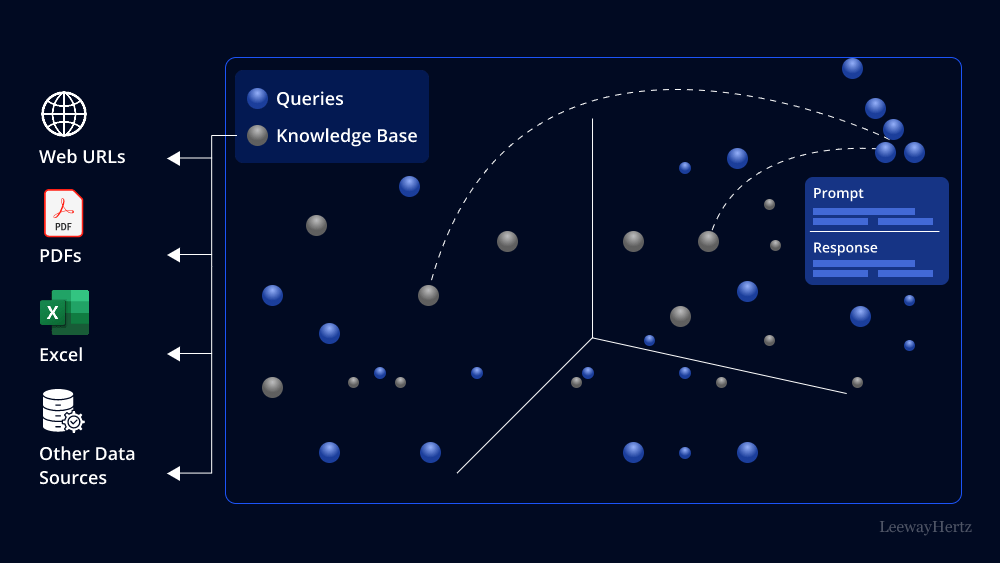
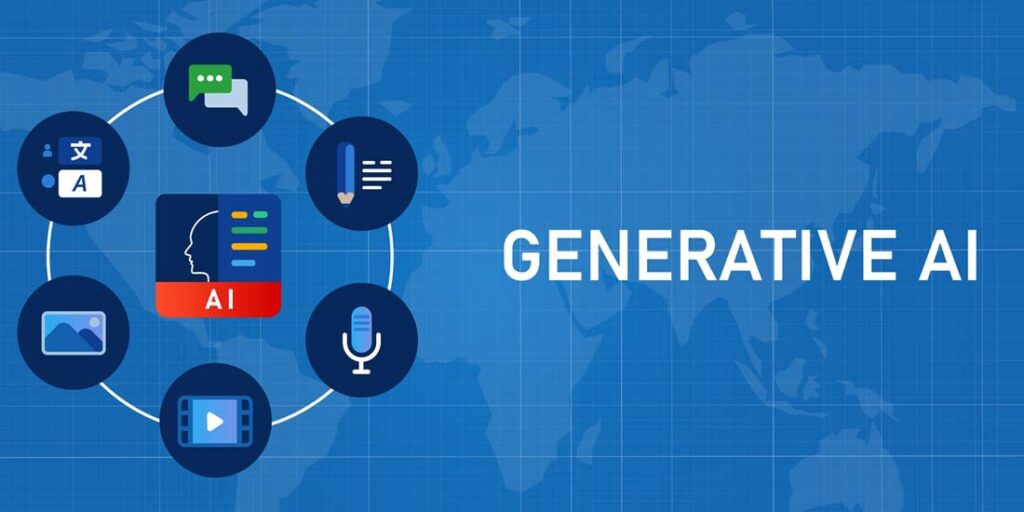







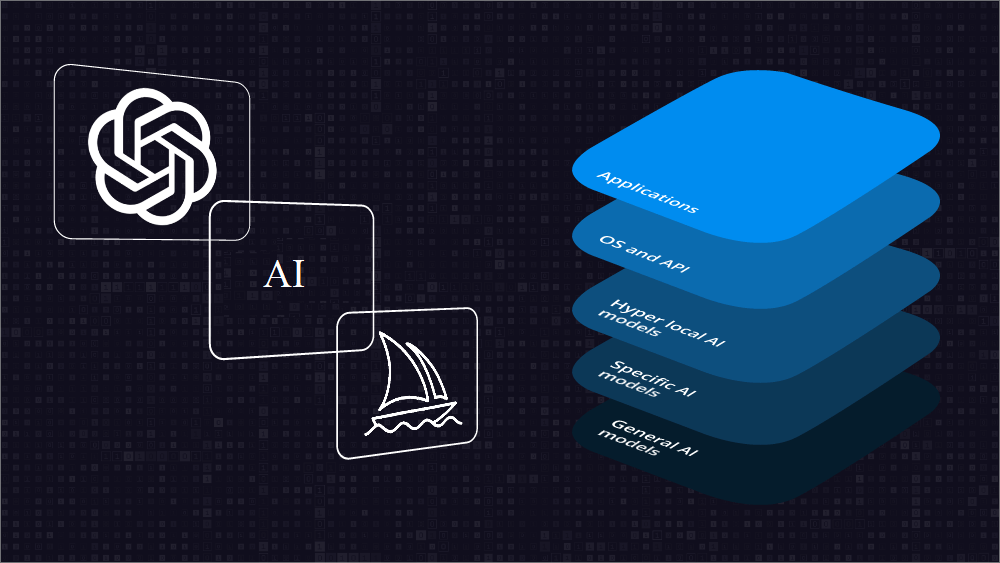




 Development Services