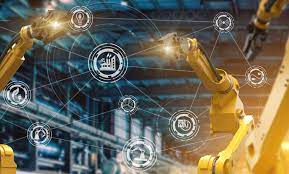
In today’s rapidly evolving industrial landscape, the role of technology in manufacturing cannot be overstated. The integration of cutting-edge solutions, such as Generative AI, has ushered in a new era of efficiency, precision, and innovation. This article delves into the transformative power of Generative AI in manufacturing, showcasing its remarkable impact on product design, optimization, and the overall competitiveness of companies in the industry.
The Dawn of Generative AI in Manufacturing
Generative AI, a subset of artificial intelligence, is a technology that has been gaining significant momentum in recent years. It has opened up new possibilities and has the potential to revolutionize manufacturing processes across various sectors, from aerospace to consumer electronics.
Generative AI systems, often referred to as generative design or generative modeling, leverage machine learning algorithms to create, optimize, and adapt designs based on specified parameters and objectives. This innovation has the capacity to solve complex engineering problems and provide solutions that are often beyond the reach of human designers.
- Design Optimization
One of the primary applications of Generative AI in manufacturing is design optimization. Traditional design processes often rely on iterative approaches, which can be time-consuming and lead to suboptimal results. Generative AI, on the other hand, streamlines and accelerates this process, while simultaneously enhancing the final design.
By inputting key parameters, such as material properties, manufacturing constraints, and performance criteria, Generative AI can produce a multitude of design alternatives. These designs are not only innovative but are also highly efficient, as the AI system can identify unconventional and lightweight structures that are difficult for human designers to envision.
For instance, in the automotive industry, Generative AI can be employed to design vehicle components that are not only lighter but also stronger. This reduction in weight can lead to improved fuel efficiency and reduced environmental impact, making it a win-win solution for manufacturers and the planet.
- Supply Chain Management
Generative AI also has a significant impact on supply chain management. It can help manufacturers optimize their logistics and distribution networks by providing data-driven insights. For instance, by analyzing historical data and real-time factors such as weather and traffic conditions, Generative AI can suggest the most efficient routes for shipping products. This not only reduces operational costs but also minimizes delivery times, leading to improved customer satisfaction.
Furthermore, Generative AI can forecast demand more accurately, enabling manufacturers to maintain optimal inventory levels and reduce wastage. It can also identify potential supply chain bottlenecks and suggest preventive measures. This level of predictive capability is invaluable in today’s fast-paced manufacturing environment.
- Customization and Personalization
The era of mass production is gradually giving way to a more personalized approach in manufacturing. Consumers are increasingly seeking products tailored to their unique preferences, and Generative AI plays a pivotal role in making this shift possible.
By analyzing customer data and preferences, Generative AI can generate designs that cater to individual needs. This is particularly evident in industries like fashion, where AI algorithms can create personalized clothing patterns or in 3D printing, where products can be customized to an unprecedented degree.
This customization not only enhances customer satisfaction but also offers a competitive advantage to manufacturers who can meet the growing demand for unique, personalized products.
- Quality Control
Ensuring product quality is paramount in manufacturing. Generative AI systems can bolster quality control by identifying defects and anomalies in real-time. By analyzing data from sensors and cameras on the manufacturing line, AI can spot discrepancies that might be missed by human inspectors.
Generative AI can also predict when equipment or machinery is likely to fail, allowing for proactive maintenance. This predictive maintenance approach minimizes downtime and costly repairs, ensuring a more efficient production process.
- Sustainability
In an era where environmental consciousness is a top priority, Generative AI is playing a crucial role in promoting sustainability in manufacturing. By optimizing designs and materials, it reduces waste and energy consumption. In addition, it aids in the development of more eco-friendly products and production methods.
For instance, in the architecture and construction industry, Generative AI can be used to design buildings that are not only aesthetically pleasing but also energy-efficient and environmentally friendly. These designs can incorporate features like passive cooling and renewable energy sources, contributing to a greener future.
- Cost Reduction
Manufacturers are always seeking ways to reduce costs without compromising quality. Generative AI can contribute significantly to cost reduction efforts by optimizing various aspects of the manufacturing process.
It can minimize material waste by generating designs that use materials more efficiently. Moreover, it can optimize production schedules to reduce idle time and energy consumption. These cost-saving measures ultimately translate into improved profitability for manufacturing companies.
Case Studies: Real-World Applications
To further illustrate the transformative power of Generative AI in manufacturing, let’s explore a few real-world applications.
- Airbus: Airbus, one of the world’s leading aerospace manufacturers, has been using Generative AI to design components for their aircraft. By inputting parameters like weight, strength, and material constraints, they’ve been able to generate innovative and efficient designs for complex parts. This has not only reduced the weight of components but has also led to substantial fuel savings.
- Ford: In the automotive industry, Ford has harnessed Generative AI to optimize vehicle parts, such as brackets and engine components. This has allowed them to reduce material usage and weight while maintaining or improving performance. The result is lighter, more fuel-efficient vehicles.
- Siemens: Siemens has integrated Generative AI into its manufacturing operations to enhance the design of gas turbine components. By leveraging AI-driven design, they’ve achieved a reduction in fuel consumption and emissions, aligning with the global push for greener energy solutions.
- Adidas: In the fashion industry, Adidas has employed Generative AI to create customizable 3D-printed midsoles for their sneakers. Customers can now have midsoles tailored to their individual foot shape and running style, providing a higher level of comfort and performance.
Conclusion
Generative AI in manufacturing represents a paradigm shift in how products are designed, optimized, and produced. Its capacity to enhance design, reduce costs, improve sustainability, and enhance customization is reshaping the industry landscape. As more manufacturing companies embrace this technology, the potential for innovation and competitiveness knows no bounds.
The key to success lies in the integration of Generative AI with existing manufacturing processes and the willingness to adapt to this rapidly evolving technological landscape. The future of manufacturing is undeniably intertwined with Generative AI, and those who embrace it will lead the way in delivering exceptional products while driving the industry toward a more sustainable and customer-centric future.
Source Url: https://www.leewayhertz.com/generative-ai-in-manufacturing/

 Development Services