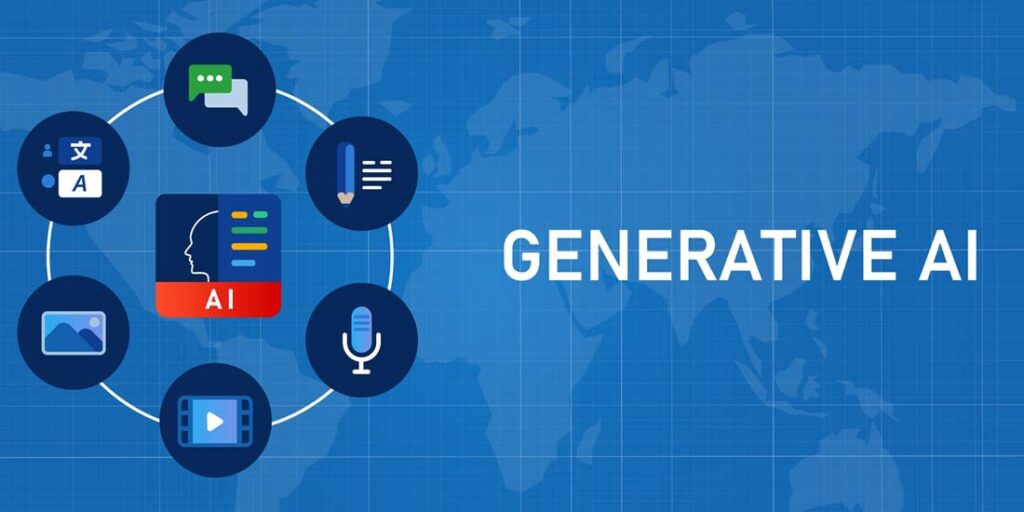
Generative AI is a groundbreaking technological advancement that has captured the attention of industries across the board. By enabling machines to create data and content, it has opened up a realm of possibilities, revolutionizing how we approach various tasks. In this article, we’ll delve into the diverse and innovative use cases of Generative AI, exploring how it’s transforming industries and enhancing human capabilities.
Content Generation
Generative AI has found its primary application in content generation. It can produce high-quality written content, including articles, blog posts, and marketing materials. This capability not only saves time but also ensures consistent, on-brand messaging.
Imagine a scenario where a company needs to churn out product descriptions for an e-commerce website. With Generative AI, it becomes a breeze. You can provide the AI with product details, and it will generate enticing and accurate descriptions in no time.
Artificial Creativity
The art world has also been significantly impacted by Generative AI. It allows artists to collaborate with AI to create unique pieces of art. This fusion of human creativity and machine assistance has resulted in fascinating and innovative works of art.
Generative AI can create art that adapts to different themes and moods, making it versatile and customizable. Artists can harness this technology to explore new frontiers of creativity and push the boundaries of their own imagination.
Chatbots and Virtual Assistants
Chatbots and virtual assistants have become indispensable in the business world. They enhance customer support, provide information, and streamline communication. Generative AI can elevate these chatbots to a whole new level of sophistication.
A well-implemented Generative AI can engage in more natural and human-like conversations, adapting to user queries and sentiments. This level of interaction not only improves user experience but also saves businesses significant time and resources.
Enhanced Data Augmentation
In data-driven industries, the need for large and diverse datasets is paramount. Generative AI can assist in creating synthetic data to augment existing datasets. This is particularly valuable in machine learning and AI research, where more data leads to better models.
Whether you need additional images, text, or any other type of data, Generative AI can help generate it, reducing the need for extensive data collection and labeling.
Video Game Development
Generative AI is making waves in the gaming industry by simplifying and enhancing game development. It can create environments, characters, and even entire game narratives. This level of automation speeds up the game development process and can lead to more dynamic and unpredictable gameplay.
Game developers can utilize Generative AI to create expansive, open-world experiences that are rich with detail. It can also be used to generate non-playable characters (NPCs) with unique personalities and dialogues.
Drug Discovery and Healthcare
Generative AI is playing a significant role in drug discovery. By simulating molecular structures and predicting how they interact with biological systems, it accelerates the drug development process. This is especially crucial in cases like the rapid development of vaccines during a pandemic.
In healthcare, Generative AI also aids in creating patient records, medical reports, and even assisting in medical diagnoses. It helps healthcare professionals by providing valuable insights, saving time, and reducing errors.
Financial Forecasting
The financial sector relies heavily on accurate forecasting. Generative AI can analyze vast datasets and generate predictions for stock market trends, investment strategies, and risk management. This empowers financial analysts with valuable insights for decision-making.
Moreover, Generative AI can create comprehensive financial reports and summaries, reducing the time spent on data analysis and reporting.
Content Personalization
Generative AI can tailor content to individual users, creating a more engaging and personalized experience. From dynamically generating product recommendations on e-commerce sites to customizing news articles, it enhances user engagement and drives conversions.
Imagine an online shopping platform that personalizes product listings based on your browsing and purchase history. Generative AI makes this possible, optimizing user experience and increasing sales.
Language Translation and Localization
Language barriers are a significant challenge in our interconnected world. Generative AI has made remarkable progress in translation and localization. It can translate text, voice, and even video content with remarkable accuracy.
For businesses, this means the ability to expand their global reach by easily adapting content to different languages and cultures. It’s a game-changer for international marketing and communication.
Simulations and Training
Generative AI is invaluable in creating realistic simulations and training scenarios. For instance, it can generate lifelike flight simulations for pilot training or highly accurate surgical simulations for medical professionals. This results in better-trained individuals and safer, more effective real-world performance.
Conclusion
Generative AI is a transformative force that’s reshaping industries and enabling humans to achieve new heights of productivity and creativity. As we’ve explored in this article, its applications are diverse and far-reaching, from content generation and art to healthcare and finance. Embracing the power of Generative AI will undoubtedly unlock a wealth of opportunities and innovations across various domains.
Are you ready to harness the potential of Generative AI for your business or industry? The possibilities are limited only by your imagination, and the technology is evolving every day. Don’t miss out on the chance to lead the way in this exciting era of AI innovation. Explore Generative AI and open doors to unprecedented possibilities.

 Development Services