What is AIoT, and why is it important?
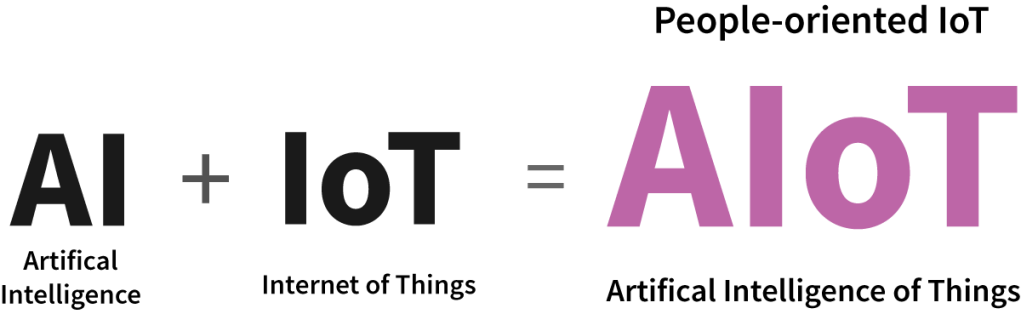
AIoT is the process of integrating AI technology into various IoT components. The combination of AI and IoT is among the most important factors to speed up the development of technology and services in the digital realm. The goal of AI is to improve operational efficiency, enhance interactions between humans and machines, and enhance the management of data and analytics.
Here’s a quick overview of the functions performed by both technologies, and how they form a symbiosis with one another.
- Internet of Things (IoT)
It is a term used to describe a system which extends internet to different sensors, objects, and gadgets (things) to gather and exchange data from their surroundings using different devices or software programs. IoT seeks to link devices and objects.
- Artificial Intelligence (AI)
Artificial Intelligence thrives on data. It’s all about learning and automatization using a variety of computational and statistical techniques. It is a term used to describe a system capable of processing data and learning or performing tasks normally related to intelligence that are similar to human. AI technology includes machines learning (ML) as well as natural processing of language (NLP) as well as facial and voice recognition. For more specific information, AI brings intelligence to objects and machines.
In combination, AI and IoT technologies make sophisticated, intelligent systems in which AI acts as a brain for IoT’s body. The IoT devices collect and send information from different sources to aid in the learning process that’s involved in AI to automate processes.
AI is a powerful tool that brings machine learning and decision-making capabilities for IoT systems, which improves the management of data and analyzing with enormous productivity improvements.
In conjunction together with AI, IoT devices get additional capabilities, such as learning from interactions with users as well as service providers and other devices that are part of the network. They can be adapted to changes in inputs and new conditions in the environment , and can perform the tasks with no intervention from a human.
How do Artificial Intelligence of Things-enabled devices work?
Since IoT networks are growing in every field there is a large amount of unstructured data from machines also is available. The growing volume of machine-generated and human-oriented data creates the need for AI support for non-structured analytics of data. The information generated by IoT-powered systems is crucial to satisfy corporate requirements and resolve the problems of functional managing the lifecycle of products.
AI and IoT are similar interconnected elements. When these two technologies work together, they are mutually beneficial and provide value to one another. AI can add value to IoT because of machines learning and decision-making, while IoT can benefit AI because of signals, data exchange and connectivity.
AIoT highlights the need for interoperability between devices (chipsets) and programs (programs as well as operating systems) and platform. Like earlier, AI implementations were monolithic with vertically-designed solutions, they require APIs to make devices, platforms and software extremely interoperable.
What are the advantages of AIoT?
- Boosting Operational Efficiency
AIoT deployment aids in streamlining business operations by providing accurate forecasts and enhanced efficiency. Machine learning algorithms paired with AI can predict operational conditions and determine the parameters that need to be modified to provide better results. In addition to providing continuous data streams and identifying patterns that aren’t deceiving on basic indicators, AIoT also delivers meaningful information to prevent process redundancy and over-consuming time. For instance, Google leverages the power of AIoT to reduce the cooling costs.
- Advanced Risk Management
A combination of AI and IoT aids in predicting potential risks and automating the response. It helps to manage the financial loss, safety of employees as well as cyber dangers. For instance, Fujitsu helps ensure the security of employees through an analysis of sources of information through AI and wearables that are connected.
- Elimination of expensive unplanned downtime
Different organizations such as the oil and gas industry generally suffer from unexpected breakdowns. Equipment breakdowns cause an extended period of downtime which results in massive loss. The AI-enabled IoT platform and devices allows you to monitor machines in a consistent manner and recognize patterns that can predict malfunctions of the machine in time. The ability to anticipate equipment failure helps plan regular maintenance tasks. AIoT devices aid in anticipating breakdowns and malfunctions in machinery through data analytics and avoiding adverse effects from downtime.
- Enhanced Products and Services
Natural Language Processing aims to enhance communication via gestures, speech or text between devices and humans. AIoT will allow for the creation of new products or increase existing services’ rapid process of data to help businesses. AIoT-powered devices, such as drones and robots provide an entire experience of monitoring and inspection to take human-like, intelligent decisions and make the right choices. Commercial vehicles also benefit from AIoT. It assists in the management of fleets by monitoring all the relevant information. Rolls Royce is a great example of incorporating AI to assist with IoT-enabled aircraft engine maintenance to detect patterns of perception and discover operational information.
- High capacity
IoT devices range from top-of-the-line computer systems to microsensors and chipsets. A typical IoT system is comprised of batteries-powered sensors to manage the massive amount of data. AI plays an essential role in the identification, analysis and review of the huge amount of data flowing stored in cloud storage. When the amount of data is managed and manageable, it improves the capacity of the whole IoT ecosystem.

 Development Services